
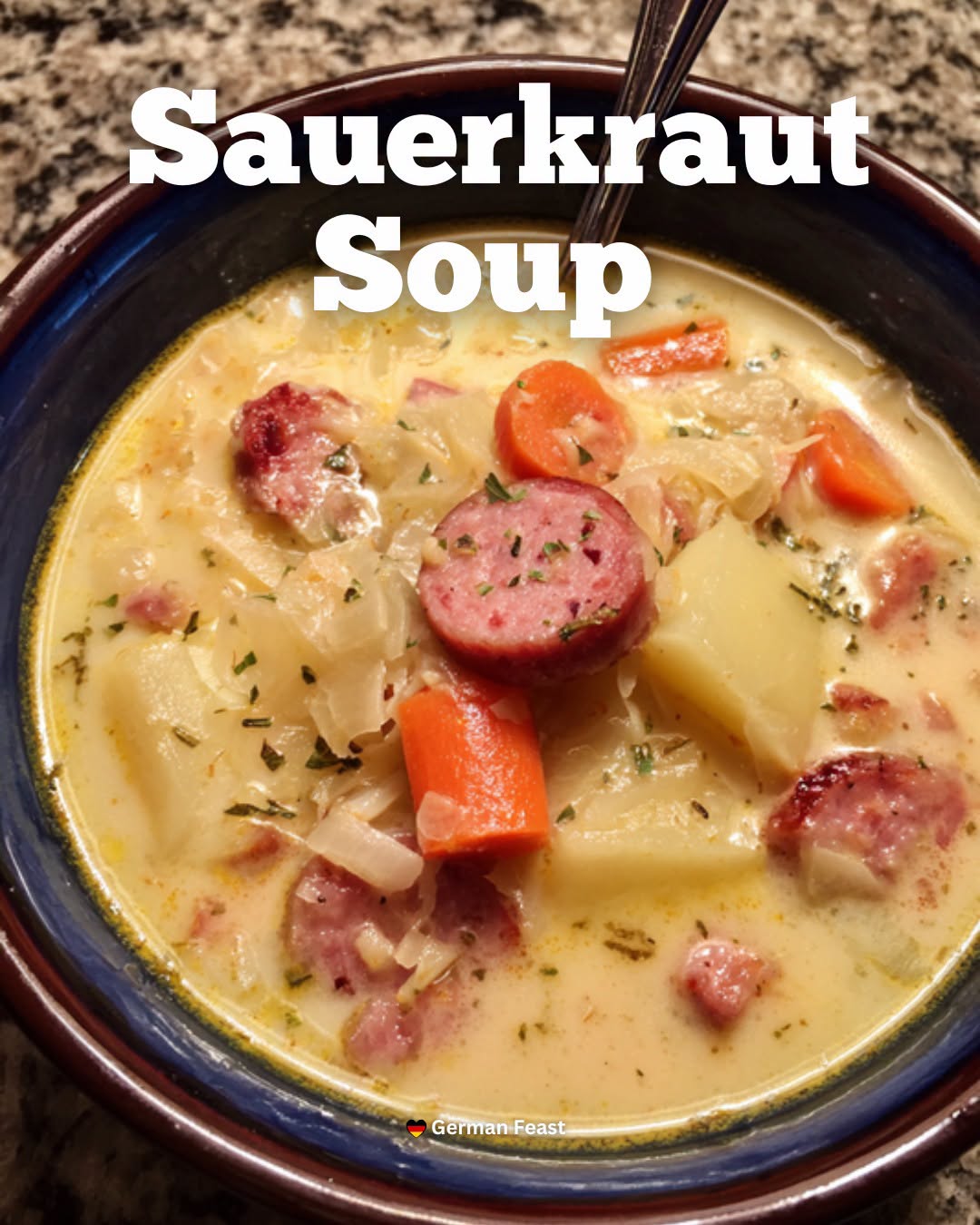
German sauerkraut soup is a classic, savory soup built around naturally fermented cabbage, gentle spices, and a rich, smoky base. It delivers a balanced sourness, deep aroma, and satisfying warmth that defines traditional German comfort food.
[Ad] Loading
This soup is straightforward to prepare, relies on everyday ingredients, and works especially well during cold weather. It suits weeknight dinners, family meals, and seasonal gatherings when a reliable, nourishing German soup is needed.
Subscribe to our Newsletter!
Get updates on the latest posts and more from EasyWorldRecipes straight to your inbox.
First Name (optional)
Website
Your Email…
Subscribe
We use your personal data for interest-based advertising, as outlined in our Privacy Notice.
Why You’ll Love This German Sauerkraut Soup?
This recipe focuses on traditional technique, clear flavors, and dependable results.
Here’s why it works so well:
Uses authentic German sauerkraut for natural acidity and depth
Builds flavor with caramelized onions and smoked bacon
Simmered gently for a balanced, rounded taste
Adaptable for both starter soup and main course portions
Stores and reheats well without losing texture
This is a dependable sauerkraut soup recipe you can return to throughout the season.
What Is German Sauerkraut Soup?
German sauerkraut soup, known as Sauerkrautsuppe, is a traditional German soup made with fermented cabbage, onions, broth, and warming spices. Many regional versions include smoked bacon and paprika, giving the soup a savory backbone and gentle smokiness.
This soup is commonly prepared in southern and western Germany, including areas such as the Black Forest and Rhineland-Palatinate. It is associated with German fall dishes and cold-weather meals, often served during the cabbage harvest season.
What makes this version classic is its restrained seasoning, slow simmering, and reliance on naturally fermented sauerkraut rather than quick-pickled cabbage. The result is a hearty soup with clean acidity and a deeply comforting character.
Necessary Equipment
You only need basic kitchen tools to prepare this soup properly.
Large heavy-bottomed pot or Dutch oven
Cutting board
Sharp chef’s knife
Wooden spoon
Ladle
A heavy-bottomed pot matters because it allows the onions and bacon to cook evenly without scorching, which is essential for building a smooth, well-rounded base flavor.
Onion and bacon in a pan, for German sauerkraut soup.
Onion and bacon in a pan
Key Ingredients & Substitutions
Each ingredient plays a clear role in achieving an authentic German sauerkraut soup.
Sauerkraut
Sauerkraut is the defining ingredient and provides the soup’s characteristic acidity. Use naturally fermented German sauerkraut for the best flavor, not quick-vinegar versions. Drain it lightly but do not rinse unless it is overly sharp, as rinsing removes beneficial fermentation notes. Jarred or bagged refrigerated sauerkraut is acceptable; canned sauerkraut is not recommended.
Smoked Bacon
Smoked bacon adds richness and depth while balancing the acidity of the fermented cabbage. Traditional options include German speck or Black Forest bacon, which bring a clean smoke flavor. Pancetta can be used if smoked bacon is unavailable, but avoid sweet-cured bacon as it alters the soup’s profile.
Onions
Onions form the aromatic base and should be slowly caramelized for sweetness. Yellow onions are preferred for their balance of sugar and savoriness. Slice them evenly to ensure consistent cooking. White onions are acceptable, but red onions are not recommended for this dish.
Garlic
Garlic enhances the savory character without overpowering the sauerkraut. Use fresh cloves, finely chopped, and add them briefly to prevent bitterness. Pre-minced garlic lacks the clean flavor needed for an authentic German soup.
Spices: Paprika, Caraway, and Marjoram
Smoked paprika contributes warmth and color, while caraway seeds support digestion and complement fermented cabbage. Dried marjoram adds a subtle herbal note common in German cuisine. Do not substitute with cumin or oregano, as they shift the flavor away from traditional German cooking.
Tomato Paste
Tomato paste provides mild sweetness and rounds out the acidity without making the soup taste like tomato. Use a small amount and cook it briefly to remove raw flavors. Tomato purée or ketchup are not suitable substitutes.
Chicken Broth
A light, well-seasoned chicken broth creates a clean background that supports the sauerkraut rather than masking it. Homemade broth is ideal, but a high-quality store-bought version works well. Avoid heavily seasoned or flavored broths.
Subscribe to our Newsletter!
Get updates on the latest posts and more from EasyWorldRecipes straight to your inbox.
First Name (optional)
Website
Your Email…
Subscribe
We use your personal data for interest-based advertising, as outlined in our Privacy Notice.
Crème Fraîche or Sour Cream
Crème fraîche adds creaminess and softens the soup’s acidity just before serving. Full-fat sour cream is an acceptable substitute. Do not boil the soup after adding dairy, as it may split.
How to Make German Sauerkraut Soup
This soup develops best with steady heat and unhurried steps. Focus on aroma, texture, and balance as you cook.
Step 1: Render the Bacon
Place the bacon in a cold pot and heat over medium-low. Cook for 8–10 minutes, stirring occasionally, until the fat is rendered and the bacon is lightly crisp. If browning too quickly, reduce the heat.
Step 2: Caramelize the Onions
Add the sliced onions to the bacon fat and cook over medium heat for 10–15 minutes. Stir regularly until soft, golden, and lightly sweet. If they darken unevenly, add a small splash of water to slow browning.
Step 3: Add Garlic and Tomato Paste
Stir in the garlic and tomato paste, cooking for 1–2 minutes until fragrant. Keep the heat moderate to prevent scorching. The mixture should smell savory, not sharp.
Step 4: Bloom the Spices
Add smoked paprika, caraway seeds, and marjoram. Stir for 30–60 seconds to release their aromas. If the spices stick, lower the heat slightly.
Step 5: Incorporate the Sauerkraut
Add the sauerkraut and stir well to coat it in the onion and spice mixture. Cook for 3–4 minutes to integrate flavors and soften the cabbage slightly.
German Sauerkraut Soup, in a large pot.
German Sauerkraut Soup
Step 6: Add Broth and Simmer
Pour in the chicken broth, bring to a gentle simmer, then reduce heat to low. Simmer uncovered for 30–40 minutes. The soup should be gently bubbling, not boiling.
Step 7: Taste and Adjust
Taste the soup and adjust salt and acidity. If too sharp, add a small amount of water or broth. If flat, a pinch of salt usually corrects it.
Step 8: Finish with Cream
Remove from heat and stir in crème fraîche or sour cream. The soup should be creamy but still brothy. Do not reboil after adding dairy.
Step 9: Rest Briefly
Let the soup rest for 5 minutes before serving. This allows the flavors to settle and the texture to smooth out.
Subscribe to our Newsletter!
Get updates on the latest posts and more from EasyWorldRecipes straight to your inbox.
First Name (optional)
Website
Your Email…
Subscribe
We use your personal data for interest-based advertising, as outlined in our Privacy Notice.
Tips for the Best German Sauerkraut Soup
Use naturally fermented sauerkraut for authentic flavor and texture
Render bacon slowly to avoid bitterness
Keep the simmer gentle to preserve fermentation notes
Add dairy only after removing from heat
Adjust acidity gradually rather than all at once
Allow a short resting time before serving
Serving Suggestions
German sauerkraut soup can be served as a starter soup or a light main course. For a main meal, plan approximately 400–450 ml per person. For a starter, smaller bowls of 200–250 ml work well.
Serve with crusty bread or traditional German rye bread to soak up the broth. A simple leafy green salad dressed with a mild vinaigrette pairs well and balances the richness of the soup.
This soup also fits well into larger German meals alongside dishes such as Schnitzel, Rouladen, or Spätzle. It is particularly suitable for Oktoberfest-style menus and cold weather gatherings.
Make-Ahead and Storage
This soup improves in flavor after resting.
Refrigerate: up to 4 days
Freeze: up to 2 months
Reheat gently over low heat, stirring occasionally, and avoid boiling after reheating.
German Sauerkraut Soup Sauerkrautsuppe, served in a bowl.
German Sauerkraut Soup Sauerkrautsuppe
FAQ
Is German sauerkraut soup very sour?
It has a pleasant acidity, not an aggressive sourness. Proper simmering and the addition of cream soften the fermented flavor.
Can I make this soup without bacon?
Yes, but the soup will lose some depth. Use a small amount of butter and smoked paprika to compensate.
Should sauerkraut be rinsed before using?
Only rinse if it is extremely salty or sharp. Lightly drained sauerkraut provides the best authentic flavor.
What makes this an authentic German recipe?
The use of fermented sauerkraut, caraway, marjoram, and gentle simmering follows traditional German cooking methods.
Can I use vegetable broth instead of chicken broth?
Yes, a mild vegetable broth works, but avoid strong flavors that compete with the sauerkraut.
