
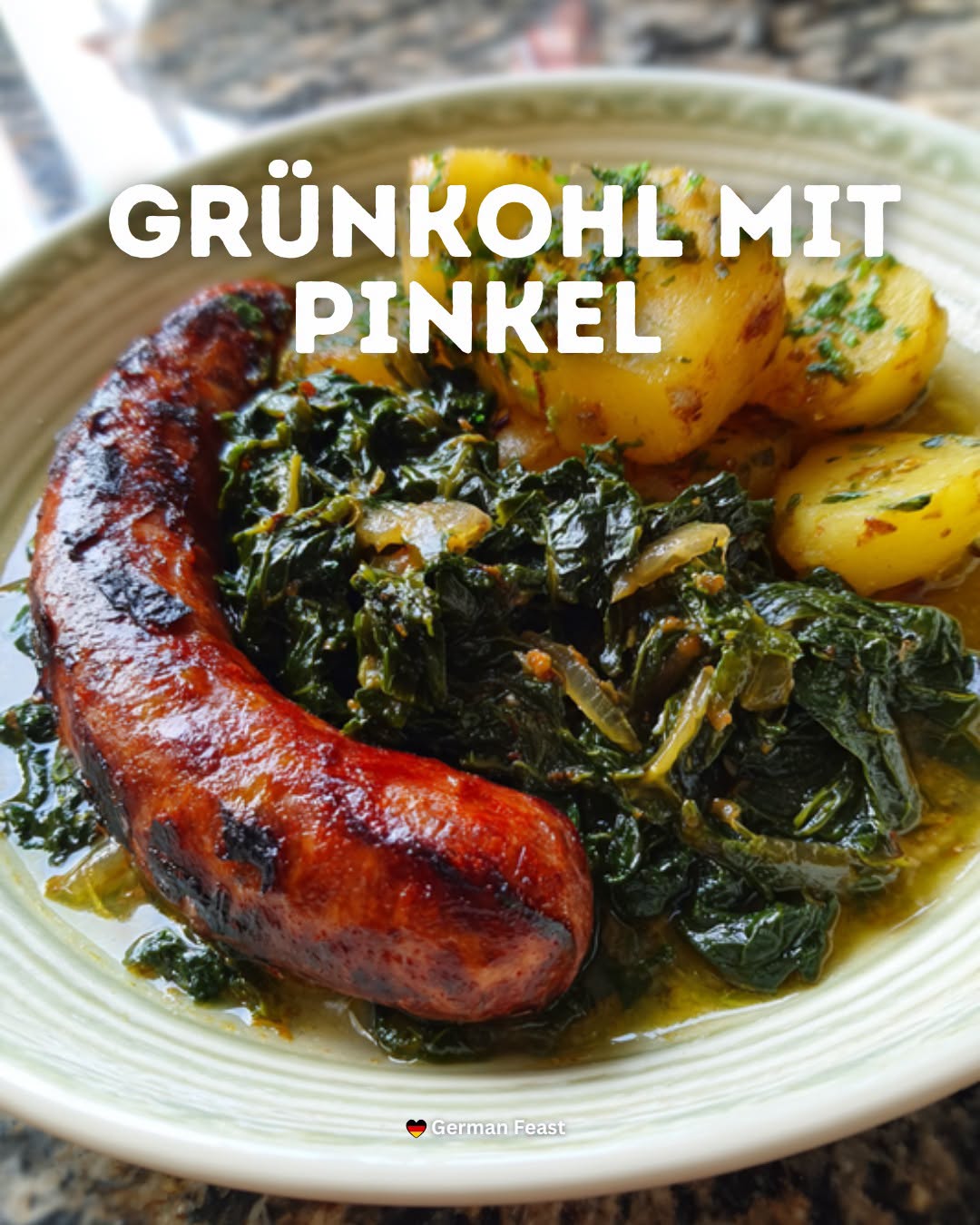
If you are looking for a true grünkohl mit pinkel recipe, this classic North German dish is one of the most comforting meals you can make. It is rich, hearty, deeply savory, and perfect for cold weather when you want something warm and filling on the table. The combination of slow-cooked kale, smoky meat, and traditional sausage creates a meal that feels rustic, generous, and full of old-world flavor.
This german kale and sausage recipe is much more than a simple stew. In Northern Germany, Grünkohl mit Pinkel is a beloved winter tradition that brings people together around the table. It is often served during the colder months, especially after long walks in the crisp winter air, and it is known for its rich taste, satisfying texture, and simple but honest ingredients.
In this post, you will learn exactly what Grünkohl mit Pinkel is, what makes Pinkelwurst special, which ingredients give the dish its authentic taste, and how to cook it slowly for the best result. The instructions are detailed and practical, so even if this is your first time making gruenkohl recipe at home, you can follow along with confidence.
Why I Love This Recipe?
It is true comfort food. This dish is warm, rich, and deeply satisfying. The kale becomes tender and flavorful as it cooks, and the sausages and pork add body and depth that make every bite feel hearty and complete.
It has real German character. If you want to cook something traditional and authentic, this is a wonderful choice. It is a classic regional recipe with strong roots in Northern Germany, and it tastes like the kind of meal passed down through generations.
It is perfect for cold weather. Few dishes are as welcoming on a winter day as a pot of slowly cooked kale and sausage. The long simmer gives the whole dish a deep and rounded flavor that feels especially good when the weather is cold.
It gets even better as it rests. Like many slow-cooked dishes, Grünkohl mit Pinkel often tastes even better the next day. That makes it a great make-ahead meal for family dinners, holiday gatherings, or cozy weekend cooking.
It is flexible when needed. The most authentic version uses Pinkelwurst, but you can still make a very good version if you need to substitute with smoked sausage or another traditional German-style sausage. That makes it easier for home cooks outside Germany.
Subscribe to our Newsletter!
Get updates on the latest posts and more from EasyWorldRecipes straight to your inbox.
First Name (optional)
Website
Your Email…
Subscribe
We use your personal data for interest-based advertising, as outlined in our Privacy Notice.
What Is Grünkohl mit Pinkel?
Grünkohl mit Pinkel is a traditional north german kale stew or braised kale dish made with kale, onions, broth, mustard, and a mix of sausages and cured pork. It is especially popular in Bremen, Lower Saxony, Oldenburg, and nearby northern regions. The dish is strongly tied to winter, when kale is at its best and rich food is especially welcome.
Although people often call it a stew in English, the texture can vary from brothy to thick and almost braised, depending on the region and the cook. The kale is usually cooked low and slow until it becomes tender and full of flavor. The meat is often added in stages so the pot develops a layered, savory taste.
One of the most traditional parts of the dish is Pinkelwurst, often simply called Pinkel. This sausage gives the recipe its famous name and much of its special flavor. Many households also add Kassler, smoked pork belly, or Mettwurst, which makes the dish even richer and more complex.
Grünkohl mit Pinkel is not delicate food. It is generous, rustic, and deeply comforting. That is exactly why so many people love it.
Grünkohl mit Pinkel German Kale & Sausage
Grünkohl mit Pinkel German Kale & Sausage
The Star of the Show: Pinkelwurst
Pinkelwurst is the most distinctive part of an authentic pinkelwurst recipe and the reason this dish stands apart from other kale and sausage meals. Pinkel is a traditional smoked sausage from Northern Germany. It is usually made with pork, bacon or pork fat, oats or groats, onions, spices, and sometimes a little broth or suet depending on the regional style.
The oats or groats are one of the key things that make Pinkel different from many other sausages. They help give it a soft, rich, almost crumbly interior once heated. This texture blends beautifully with the tender kale and also helps thicken and enrich the cooking liquid as the sausage warms in the pot.
So, what is pinkelwurst in simple terms? It is a rustic North German sausage made to be cooked gently with kale. It is not just a side item placed on the plate at the end. It is part of the flavor-building process, and its smoky, fatty, seasoned character is one of the reasons Grünkohl mit Pinkel tastes so special.
If you live outside Germany, finding authentic Pinkel can be difficult. Look in German butcher shops, specialty European markets, or online stores that sell German sausages. If you cannot get real Pinkelwurst, the closest substitute is a smoked German sausage with a rich pork flavor, such as smoked Mettwurst, Kochwurst, or a good-quality smoked bratwurst. The result will not be exactly the same, but it can still be delicious.
For the most traditional result, try to use at least one of these:
Pinkelwurst for authenticity
Mettwurst for extra smoky flavor
Kassler for savory cured pork depth
Smoked pork belly for richness and body
Using a combination of these gives the dish the kind of full, layered flavor that makes it memorable.
Ingredients for Authentic Grünkohl
Here are the key ingredients for this authentic grünkohl mit pinkel recipe. Quantities are listed in the printable recipe card below, but these notes explain why each ingredient matters.
Kale (Grünkohl): The heart of the dish. Use curly kale if possible. Fresh kale is ideal, but frozen kale also works very well and is common for this style of cooking.
Pinkelwurst: The signature sausage. It adds a seasoned, smoky, rich flavor and a soft texture that suits the dish perfectly.
Mettwurst or smoked sausage: Adds extra smoke and more meaty depth.
Kassler: Lightly cured and smoked pork, often from the loin or neck. It brings a savory and slightly salty taste.
Smoked pork belly or bacon: Gives the pot richness, flavor, and a little fat that helps carry the taste of the kale.
Onions: Essential for a sweet, savory base.
Goose fat, lard, or butter: Traditional fats help soften the onions and enrich the dish.
Mustard: A small amount sharpens the flavor and balances the richness.
Broth: Usually meat broth or vegetable broth. It helps the kale cook slowly and gently.
Oats (optional): Some cooks add a small spoonful if they want a slightly fuller texture, especially if no real Pinkel is available.
Salt and black pepper: Use carefully, because the sausages and cured pork may already be salty.
Sugar: Just a pinch can round out the kale’s bitterness.
Potatoes: Often served on the side, either boiled, salted, or lightly caramelized.
Kale for Grünkohl mit Pinkel
Kale for Grünkohl mit Pinkel
Necessary Equipment
Large heavy-bottomed pot or Dutch oven
Sharp knife
Cutting board
Wooden spoon
Tongs
Ladle
Small pot for potatoes
Colander
Subscribe to our Newsletter!
Get updates on the latest posts and more from EasyWorldRecipes straight to your inbox.
First Name (optional)
Website
Your Email…
Subscribe
We use your personal data for interest-based advertising, as outlined in our Privacy Notice.
How to Make Grünkohl mit Pinkel
Step 1: Prepare the kale
Wash the kale very well if using fresh leaves. Remove any tough stems and tear or chop the leaves into smaller pieces. If you are using frozen kale, let it thaw slightly if needed so it separates easily, but it does not need to be fully defrosted before cooking.
Step 2: Prepare the meat and sausages
Cut the Kassler and pork belly into large pieces if they are not already portioned. Leave the sausages whole. Keeping the meat in larger pieces helps it stay juicy during the long cooking time and makes it easier to remove and slice later.
Step 3: Build the flavor base
Heat goose fat, lard, or butter in a large pot over medium heat. Add the chopped onions and cook them slowly until they are soft and lightly golden. Do not rush this step, because gentle cooking brings out sweetness and creates a better base for the kale.
Step 4: Add the kale
Add the kale to the pot in batches if needed. Stir after each addition so the leaves begin to soften and coat in the fat and onions. At first the pot may seem very full, but kale will reduce as it cooks.
Step 5: Season the pot
Stir in the mustard, a pinch of sugar, some black pepper, and a little salt if needed. Add enough broth to help the kale steam and braise without drowning it. You want the kale moist and able to simmer, not swimming like soup.
Step 6: Layer in the pork
Nestle the Kassler and smoked pork belly into the kale. Partly cover them with the greens so their flavor slowly moves into the whole pot while they cook. Bring everything just to a gentle simmer.
Step 7: Cook low and slow
Cover the pot and let the kale cook over low heat for about 45 to 60 minutes, stirring now and then. This first stage is important because it softens the kale and lets it absorb the smoky meat flavor before the sausages go in. Add a splash of broth if the pot starts looking dry.
Step 8: Add the sausages carefully
Place the Pinkelwurst and Mettwurst on top of or partly into the kale. Do not boil the pot hard after this point, because sausages can split if cooked too aggressively. Let them heat gently in the kale for another 30 to 40 minutes.
Step 9: Check the texture
Lift the lid and stir gently. The kale should now be tender, savory, and thick rather than watery. If it looks too thin, simmer it uncovered for a few minutes. If it looks too dry, add a little broth and stir again.
Step 10: Taste and adjust
Remove a small spoonful of the kale and taste it before adding more salt. Because the meat and sausages are already seasoned, it is easy to over-salt this dish. Adjust with a little more mustard, pepper, or a tiny pinch of sugar if the flavor needs balance.
Step 11: Cook the potatoes
While the kale finishes, boil potatoes in salted water until fork-tender. You can serve them plain, or lightly brown them in a little butter for extra flavor. Some people like to caramelize them slightly for a sweet contrast to the savory kale.
Step 12: Rest and serve
Let the pot sit for 5 to 10 minutes off the heat before serving. Slice the Kassler if needed and serve the kale with the Pinkelwurst, other sausages, and potatoes. Spoon some of the cooking juices over everything for the best flavor.
Traditional Background and Regional Variations
One of the most interesting things about this dish is that no two families make it exactly the same way. In some homes, the kale is cooked until very soft and almost spreadable. In others, it keeps a little more texture. Some cooks use more broth, while others prefer a thicker, almost braised finish.
Different northern regions also vary in the meats they add. Some versions lean more heavily on Pinkel and Mettwurst. Others include more Kassler or smoked pork belly for a stronger cured-pork flavor. This means there is not only one correct version, but the heart of the dish stays the same: slow-cooked kale with rich, smoky meats, served hot in winter.
Serving Suggestions
Grünkohl mit Pinkel is usually served with boiled potatoes, salted potatoes, or lightly caramelized potatoes. The mild potato flavor helps balance the rich kale and sausage. If you want a fuller German-style meal, serve it with mustard on the side and a rustic bread to soak up the juices.
This dish also pairs well with other hearty winter favorites. On a German comfort food menu, you could serve it before or after dishes like German potato soup, braised red cabbage, or pan-fried potatoes. For a traditional cold-weather table, keep the sides simple and let the kale and sausage remain the main focus.
Tips for the Best Kale Stew
Use enough fat at the start. Kale needs some richness to taste full and balanced. A little goose fat, lard, or butter helps soften the greens and carry the smoky flavor from the meat through the whole dish. Without enough fat, the kale can taste flat even if the seasoning is correct.
Cook the onions slowly. This is not a step to rush. Soft, lightly golden onions add sweetness and body to the dish, and they help balance the stronger flavors of mustard, smoked meat, and kale. If the onions are undercooked, the final result can taste sharper and less rounded.
Do not drown the kale. This is one of the most important points in any german kale and sausage recipe. The kale should simmer and braise, not boil like a loose soup. Add broth gradually and only as much as needed to keep the pot moist and gently steaming.
Subscribe to our Newsletter!
Get updates on the latest posts and more from EasyWorldRecipes straight to your inbox.
First Name (optional)
Website
Your Email…
Subscribe
We use your personal data for interest-based advertising, as outlined in our Privacy Notice.
Let the meat season the greens. The sausages and cured pork should not be treated as separate items only added at the end. Part of what makes this dish so special is the way their flavor slowly moves into the kale during cooking. That is why layering and gentle simmering matter so much.
Avoid a hard boil after adding the sausages. Pinkelwurst and other smoked sausages can split if the liquid boils too strongly. Keep the heat low and steady so the sausages warm through without losing texture or flavor.
Balance bitterness with care. Kale naturally has a little bitterness, and that is part of its charm. A small pinch of sugar and a little mustard can round that bitterness without making the dish sweet. Use both gently and taste as you go.
Give it time. Grünkohl is not a quick dish. The flavor improves when it cooks slowly, and it often tastes even better after resting. This is the kind of recipe that rewards patience and gentle cooking more than high heat or speed.
Taste late, not early. Early in cooking, the broth may seem mild. But once the sausages and cured pork finish heating, the whole pot becomes saltier and fuller in flavor. Always do your final seasoning near the end so you do not overdo it.
Grünkohl mit Pinkel
Grünkohl mit Pinkel
Make-Ahead and Storage
Make ahead: This dish is excellent for making one day in advance. Let it cool, store it in the refrigerator, and reheat it gently the next day. The kale has more time to absorb the smoky, savory flavors, so the result is often even better.
Fridge: Store leftovers in an airtight container in the refrigerator for up to 3 days. Keep the kale and meat together so the flavors stay balanced and the meat does not dry out.
Freezer: Freeze cooled portions in freezer-safe containers for up to 2 months. For best texture, freeze the kale with the meat in some of the cooking liquid. Thaw overnight in the refrigerator before reheating.
Reheating: Warm everything slowly in a covered pot over low heat with a splash of broth or water if needed. Avoid boiling hard, especially if the sausages are still in the dish, because that can make them split and lose moisture.
FAQ
Can I make Grünkohl mit Pinkel without Pinkelwurst?
Yes, but the most authentic grünkohl mit pinkel recipe uses real Pinkelwurst. If you cannot find it, use smoked Mettwurst, smoked bratwurst, or another rich German-style smoked sausage.
What does Pinkelwurst taste like?
Pinkelwurst is savory, smoky, rich, and well-seasoned. Because it often contains oats or groats, it also has a softer and more rustic texture than many standard sausages.
Can I use frozen kale?
Yes. Frozen kale works very well and is a practical choice for this dish. It can even save time because it is already cleaned and chopped.
Can I make it vegetarian?
You can make a vegetarian kale stew inspired by this dish, but it will not be traditional. Use smoked vegetarian sausages, vegetable broth, onions, mustard, and perhaps a little smoked paprika for depth.
How do I keep the kale from becoming too watery?
Add broth slowly and simmer gently. If the pot looks too thin near the end, remove the lid and cook for a few extra minutes so some of the liquid reduces.
