
🌶️ The Truth Behind the Spice That Shocked the Internet
You’ve sprinkled it on deviled eggs, stirred it into goulash, and dusted it over roasted potatoes. But if you thought paprika came from a mysterious “paprika tree,” you’re not alone.
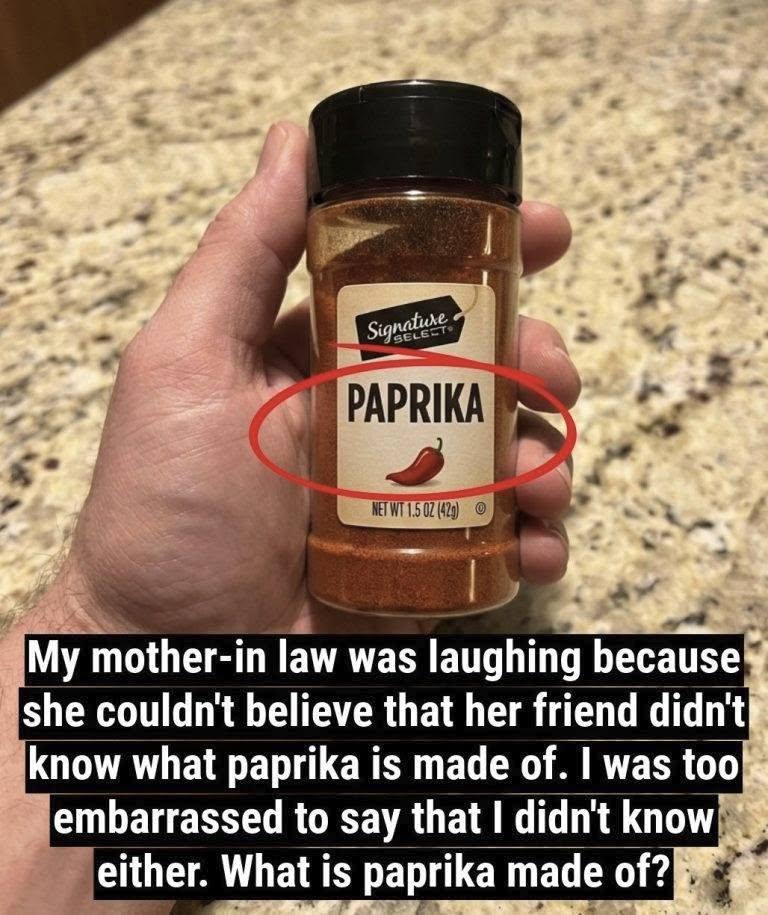
Recently, social media users were surprised to learn that paprika is simply made from dried and ground red peppers—yes, the same sweet bell peppers you can buy at the grocery store.
No secret plant. No exotic fruit. Just sun-ripened red peppers transformed into one of the world’s most beloved spices.
🌶️ So… What Exactly Is Paprika?
Paprika is a powdered spice made from dried and ground red peppers (Capsicum annuum)—the same species as bell peppers, though specific varieties are often cultivated for color, sweetness, or mild heat.
Despite its vibrant red color, most paprika is not spicy unless it’s labeled “hot” or “spicy.” Instead, it’s valued for its:
Rich red color (from pigments like capsanthin)
Earthy, slightly sweet flavor
Aromatic depth
💡 Fun fact: Hungary and Spain are two of the world’s leading producers of paprika, each with distinct styles and traditions.
🔍 The 3 Main Types of Paprika
1. Sweet Paprika (Classic)
Mild, fruity, and slightly earthy
Common in deviled eggs, potato salads, and creamy sauces
2. Smoked Paprika (Spanish Pimentón)
Deep, smoky flavor with a wood-fired aroma
Used in chorizo, paella, soups, and roasted meats
🇪🇸 Traditional smoked paprika is made by drying peppers over oak fires, especially in Spain’s La Vera region.
3. Hot Paprika
Mild to moderately spicy
Adds both heat and sweetness
Ideal for stews, spice rubs, and spicy dips
🏠 Can You Make Paprika at Home?
🏠 Can You Make Paprika at Home?
Yes—paprika can be made at home with just red peppers and time.
What you need:
6–8 fully ripe red bell peppers
A dehydrator or low-temperature oven
A spice grinder or blender
Steps:
Remove stems, seeds, and white ribs
Slice peppers into thin strips
Dry until completely brittle
Dehydrator: 125°F (52°C) for 8–12 hours
Oven: 170°F (77°C) for 4–6 hours (door slightly open)
Grind into a fine powder
Store in an airtight jar (lasts ~6 months or longer)
✨ Pro tip: A pinch of smoked salt can deepen the flavor.
🌍 Why the Confusion?
Many people assume paprika comes from a special plant because:
It’s sold as a standalone spice
Its deep red color looks “too intense” for ordinary peppers
Most people don’t see the drying process behind spices
But paprika is simply a processed form of red peppers—just like chili powder comes from chilies or black pepper from peppercorns.
🥘 How to Use Paprika Like a Pro
Don’t burn it: Add it with oil early in cooking, but avoid high heat (it can turn bitter).
Use it for color: Sprinkle on eggs, hummus, mashed potatoes, or roasted vegetables.
Layer flavors: Combine with garlic, cumin, or oregano in rubs and marinades.
Try smoked paprika: Great for beans, soups, and grilled meats.
💬 Final Thought
There may be no “paprika tree,” but the truth is even better: a humble pepper, carefully dried and ground, becomes a spice that adds color, warmth, and depth to kitchens around the world.
The next time you reach for that red jar, remember—you’re not just adding seasoning.
You’re adding a bit of agricultural history, preserved flavor, and a surprisingly simple ingredient transformed through tradition.
