
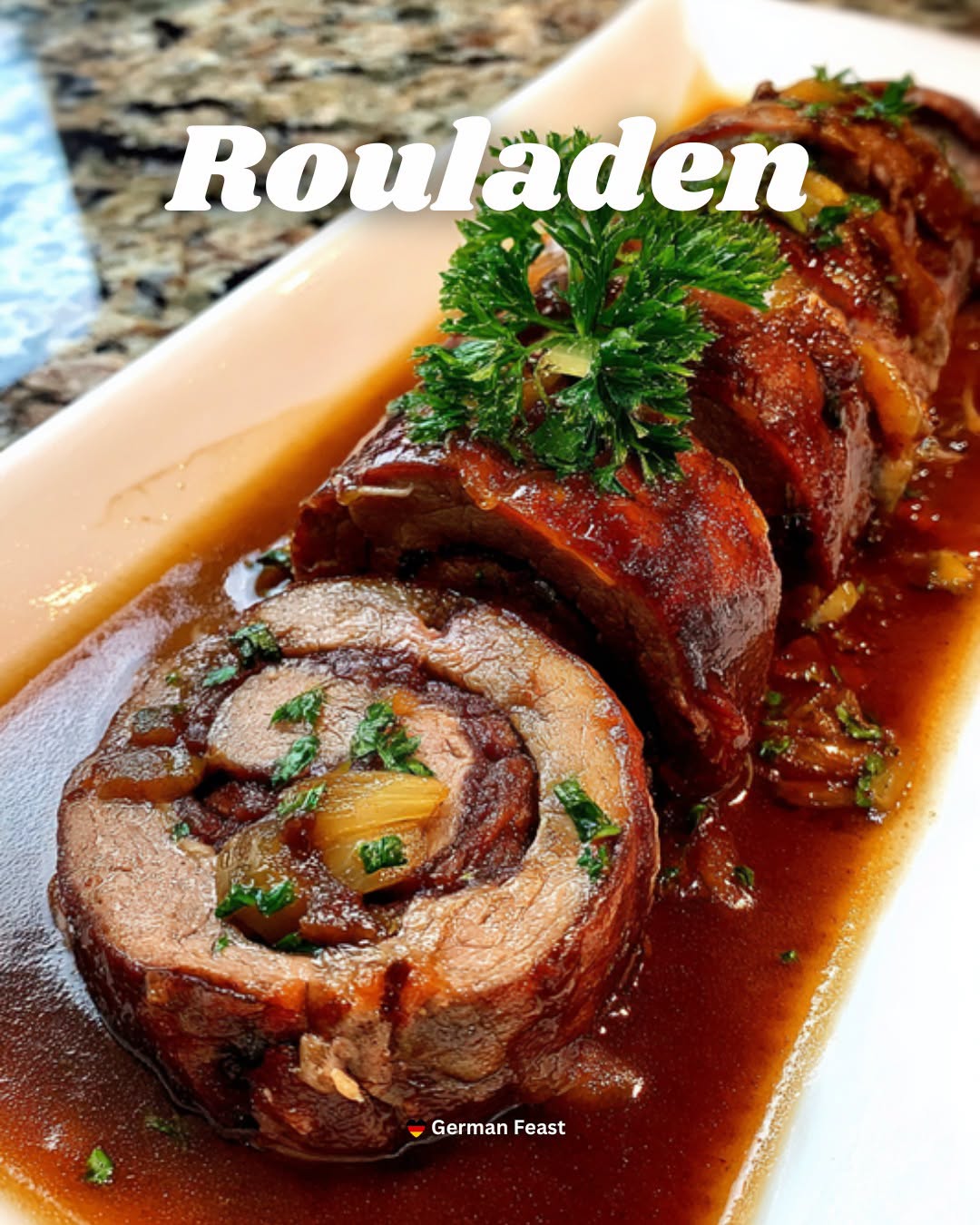
Walk into a German home on a cold Sunday and there’s a good chance you’ll smell beef and gravy long before you reach the table. Rouladen is one of those dishes that feels made for slow afternoons, big plates, and people reaching for one more spoonful of sauce.
These German beef rouladen are thin slices of beef spread with mustard, filled with bacon, onion, and pickle, then rolled tightly and browned before a long braise. The filling sounds simple, but together it makes the beef taste much deeper than you’d expect. The pickle matters more than people think, too.
This rouladen recipe keeps the classic filling and the rich gravy method from the original recipe card. The roux is made first, then the beef rolls braise right in the gravy. That’s a very old-fashioned home-cook way to make Rinderrouladen, and it gives the sauce plenty of time to take on the flavor of the browned beef.
Honestly, the rolling is the only part that looks tricky at first. Once you use the pickle as the center of the roll, it becomes much easier.
What Is Rouladen?
Rouladen, also called Rinderrouladen, are German beef rolls filled with mustard, bacon, onions, and pickles. The word Rinderrouladen simply means beef roulades, or rolled beef.
The beef is sliced thin, spread flat, filled, rolled, secured, and then slowly cooked until very tender. The filling seasons the meat from the inside while the outside browns and cooks in gravy.
You’ll find rouladen served for Sunday dinner, family meals, holidays, and other special days. It’s a dish people often connect with German home cooking because it isn’t fast food. It takes a little time, but most of that time is gentle cooking.
The traditional filling can change a little from one home to another. Some cooks use more onion. Some add a little extra mustard. You may even see versions with hard-boiled egg inside. But mustard, bacon, onion, and pickle are the classic combination most people recognize.
Subscribe to our Newsletter!
Get updates on the latest posts and more from EasyWorldRecipes straight to your inbox.
First Name (optional)
Website
Your Email…
Subscribe
We use your personal data for interest-based advertising, as outlined in our Privacy Notice.
Why You’ll Love This Rouladen Recipe
This German rouladen recipe looks like something you’d only make for a big holiday, but the work is actually very simple. The beef gets filled, rolled, browned, and then left to cook slowly. Once the lid goes on, you don’t need to stand beside the stove.
The flavor is another reason we make it. Mustard gives the inside a sharp little bite, bacon adds fat and smoke, onion softens as it cooks, and the pickle brings salt and acid. Then all of that drips into the gravy during the long braise. The result tastes much richer than the short ingredient list would suggest.
It’s also a great make-ahead meal. You can roll the beef earlier in the day or even the night before, then cook it when you’re ready. Leftovers reheat well in the gravy, and the rolls freeze well too. When we have friends over, that makes rouladen much less stressful than a dinner that needs last-minute cooking.
How to Roll Rouladen: The Pickle Trick
The easiest way to make neat German beef rolls is to stop thinking of the pickle as just another filling. Use it as the center of the roll.
That one small change makes everything easier because the pickle gives you something firm to roll the beef around. Instead of trying to tuck loose bacon, onion, and pickle pieces into soft meat, you build the roll around one solid center.
Lay the beef flat and spread on the mustard. Put each thin slice of beef on your work surface and gently flatten any thick spots if needed. Spread one tablespoon of mustard over the surface, going almost all the way to the edges. A thin, even layer works better than a thick blob in the middle.
Add the bacon and onion. Lay one slice of bacon lengthwise over the mustard, then add a small amount of thinly sliced onion. Don’t pile the onion too high because too much filling makes the roll harder to close. You want enough for flavor, but the beef still needs room to wrap around everything.
Put the pickle across the near edge. Place one pickle spear across the end of the beef closest to you. Roll the beef over the pickle first so it becomes the center of the rouladen. From there, keep rolling forward tightly, using the pickle almost like the center of a little wheel.
Fold the sides in as you finish. As you reach the last part of the roll, fold the side edges inward like you would with a burrito. This helps hold the onion and bacon inside while the meat cooks. Secure each roll with two toothpicks or tie it with kitchen twine.
Brown seam-side down first. Put the rolls in the hot pot with the seam against the bottom. That first bit of heat helps hold the shape before you turn them. Brown the rolls well on every side before making the gravy.
If you want an even deeper crust, you can lightly dust the outside of the rolls with flour before browning. Don’t coat them heavily. A very light dusting is enough to help with browning and can also add a little more body to the gravy.
German rouladen sliced to show mustard, bacon, onion, and pickle inside the rolled beef.
Rouladen Filling Inside
Key Ingredients & Substitutions
Beef top round or flank steak – 4 large slices, about ¼ inch thick: Thin slices of beef are the base of German beef rouladen because they roll without breaking but still hold together through a long braise. Ask your butcher to slice the meat thin if you can, or gently pound thicker pieces between sheets of plastic until they’re even.
German mustard – 4 tablespoons: Mustard seasons the beef from the inside and helps cut through the richness of the bacon and gravy. German mustard is the best choice, though Dijon works very well when that’s what you have.
Bacon – 4 slices: Bacon adds salt, fat, and a light smoky taste as the rolls cook. Regular streaky bacon works best because the fat melts into the beef, though lightly cooked bacon can be used if you prefer a firmer texture inside.
Onion – 1, thinly sliced: Onion softens inside the rouladen and gives the filling sweetness and depth. Yellow onion is the easiest choice, but white onion works too.
Pickles – 4 small dill pickles or German gherkins, sliced lengthwise: German gherkins are usually sweet-and-sour with a good vinegary crunch, and they’re an important part of traditional rouladen. The pickle seasons the beef from inside and helps keep the center juicy, and you don’t really taste “pickle” in the finished roll as much as you taste deeper savory flavor.
Olive oil – 2 tablespoons: Oil helps the beef brown before the gravy goes into the pot. A neutral oil can replace it if you prefer.
Beef broth – 2 cups: The broth forms the main base of the gravy and picks up all the browned bits left in the pot. Low-sodium broth is useful because the bacon and pickles already bring salt.
Red wine – ½ cup, optional: Dry red wine gives the gravy more depth and a darker taste. Cabernet Sauvignon, Merlot, or another dry red works well, while extra beef broth is the easiest alcohol-free substitute.
All-purpose flour – 2 tablespoons: Flour is used with butter to make the roux before the beef goes back into the pot. This gives the gravy body from the beginning instead of thickening it only at the end.
Butter – 2 tablespoons: Butter combines with the flour to make the roux and also adds richness to the gravy. Unsalted butter is easiest because you can control the salt later.
Salt and pepper – to taste: Season the beef before rolling, but remember that bacon, mustard, broth, and pickles all add salt too. Taste the gravy near the end before adding more.
Fresh parsley – chopped, for garnish: Parsley adds a little color and freshness when the rouladen is served. You can leave it off if you want the plate completely traditional and simple.
Secured Beef Rouladen
Secured Beef Rouladen
About Our Gravy: Braised in the Gravy, the Home-Cook Way
A lot of newer rouladen recipes brown the beef, add thin broth or wine, and then thicken the liquid after the meat is done. That works, but this recipe uses a different home-kitchen method.
Here, the roux comes first.
After the beef rolls are browned, butter and flour go into the same pot. The flour cooks with the butter, picking up the browned bits left from the beef. Then the broth and wine are whisked in to form the gravy before the rouladen go back into the pot.
That means the beef braises inside the finished gravy for the full cooking time.
I love this method because the sauce and the meat cook together. The gravy takes on the bacon, mustard, onion, pickle, and browned beef flavor as the rouladen slowly soften.
The gravy also changes as it cooks. It starts smooth and fairly loose, then becomes richer and more full-bodied after about an hour and a half with the beef.
If you like a rustic gravy, serve it just as it comes from the pot. If you want it extra smooth, lift the cooked rouladen out and strain the gravy before serving. You can also blend it briefly if there are any little onion bits or browned pieces you want to smooth out.
A small splash of heavy cream at the end is optional. It softens the gravy and makes it a little richer, but the sauce is already good without it.
Equipment You’ll Need
Large Dutch oven or heavy pot, about 5 to 6 quarts: This gives the beef enough space to brown and then braise in one layer.
Meat mallet or rolling pin: Use it to flatten beef slices that are thicker than about ¼ inch.
Two toothpicks per roll or kitchen twine: Either one keeps the rouladen closed during browning and braising.
Tongs: These make it much easier to turn the rolls without tearing them.
Whisk: You’ll need one for making the roux-first gravy smooth before the beef goes back into the pot.
Small sharp knife: Useful for cutting the onion, splitting the pickles, and trimming the beef if needed.
Cutting board: Choose one large enough to lay the beef flat while filling and rolling it.
Fine mesh strainer, optional: Use this if you want to strain the gravy before serving.
Subscribe to our Newsletter!
Get updates on the latest posts and more from EasyWorldRecipes straight to your inbox.
First Name (optional)
Website
Your Email…
Subscribe
We use your personal data for interest-based advertising, as outlined in our Privacy Notice.
German rouladen served whole with dark gravy, red cabbage, and potato dumplings.
German Rouladen, Beef Rolls
Step-by-Step Instructions for German Rouladen
Prepare the beef. Lay the four beef slices flat and check their thickness. If any part is much thicker than ¼ inch, cover it and pound it gently until the slice is fairly even. Season lightly with salt and pepper, remembering that bacon, mustard, and pickles will add plenty of flavor later.
Spread on the mustard. Spoon one tablespoon of German mustard over each piece of beef. Spread it into a thin layer from end to end so every part of the roll gets seasoned. Don’t use so much that the mustard runs out when you start rolling.
Add bacon and onions. Put one slice of bacon lengthwise on each piece of beef. Scatter a small handful of sliced onion over the bacon, keeping most of it away from the very edges. Too much filling makes the sides harder to fold and can cause the rouladen to open in the pot.
Roll around the pickle. Place a pickle spear across the end closest to you and roll the beef over it tightly. Keep rolling forward, using the pickle as the center so the rouladen stays neat and even. Fold the sides inward as you finish to keep the bacon and onion tucked inside.
Secure every roll. Push two toothpicks through each rouladen or tie it firmly with kitchen twine. Count how many toothpicks you use so you know how many must come out before serving. Set each finished roll seam-side down while you shape the rest.
Brown the rouladen well. Heat the olive oil in a large Dutch oven over medium-high heat. Put the rolls in seam-side down first and let them brown without moving for a few minutes, then turn them until all sides have good color. Brown in batches if your pot feels crowded, because crowded beef steams instead of browning.
Make the roux. Lift the browned rouladen onto a plate and lower the heat to medium. Add the butter, then sprinkle in the flour and whisk for about one minute. The mixture should look smooth and smell lightly toasted, but it shouldn’t become very dark.
Build the gravy. Slowly whisk in the beef broth, a little at a time, so the roux stays smooth. Add the red wine if you’re using it and keep whisking until the gravy has no flour lumps. Bring it to a gentle simmer and scrape the bottom of the pot so all those browned beef bits become part of the sauce.
Return the rolls to the pot. Put the rouladen back into the gravy and spoon some sauce over the tops. Cover the pot and reduce the heat to low. The gravy should barely simmer rather than boil hard, because gentle heat is what makes this cut of beef tender.
Braise until tender. Cook the rouladen for about 1½ hours, turning them once or twice if needed. Check one with a thin knife or fork near the end; the beef should feel very soft and shouldn’t fight the blade. If it still feels firm, give it another 15 to 20 minutes.
Finish the gravy. Lift the tender rolls onto a plate and carefully remove every toothpick or piece of twine. Taste the gravy and add salt or pepper only if it needs it. For a richer finish, stir in a small splash of heavy cream, or strain the sauce if you prefer it very smooth.
Serve with plenty of gravy. Place one rouladen on each warm plate and spoon the dark gravy generously over the top. Serve with red cabbage, potato dumplings, or Spätzle so there’s something on the plate to catch the sauce. Slice one rouladen if you want to show the spiral of bacon, onion, and pickle inside.
Three Ways to Braise Rouladen
The stovetop method in the recipe card is the classic way we make it, but rouladen works very well in the oven or slow cooker too.
Stovetop
After browning the beef and making the gravy, return the rolls to the pot and cover it. Keep the heat low enough that the sauce only gives a few gentle bubbles.
Cook for about 1½ hours, checking near the end for tenderness. This method makes it easy to look at the gravy and adjust the heat as you go.
Oven
The oven is my favorite choice when I want the most even heat without watching the pot.
After browning the rouladen and making the gravy, cover the Dutch oven and place it in a 325°F (165°C) oven. Braise for about 90 minutes, turning the rolls once after roughly 45 minutes.
The oven surrounds the pot with steady heat, so there’s less chance of the bottom getting too hot. It’s a very easy method when you’re also making side dishes.
Slow Cooker
You can also cook German beef rouladen in a slow cooker, but don’t skip the browning.
Brown the rolls first, then make the gravy as directed. Transfer the gravy and browned rouladen to the slow cooker and cook on LOW for 6 to 8 hours.
The longer gentle cook makes the meat very tender. I wouldn’t use the slow cooker without browning first, because you lose too much of the deep flavor that comes from the browned beef and the bits left in the pot.
Whichever method you choose, finish the same way. Lift out the rolls, remove the toothpicks or twine, taste the gravy, and add a splash of cream if you want it richer.
Expert Tips for the Best Rouladen
Ask for thin beef. Beef around ¼ inch thick is much easier to roll than a thick steak. If your slices are uneven, flatten them gently before adding the filling.
Use the pickle as your rolling core. This is the easiest shaping trick in the whole recipe. Put the pickle across the near edge and roll the meat around it so the center stays tight.
Don’t overfill the rolls. A little bacon, onion, and one pickle spear is enough. Too much filling makes the sides burst and can stop the beef from closing neatly.
Brown the meat properly. Dark brown spots on the beef make the gravy taste deeper. Give the rolls time to color instead of moving them around every few seconds.
Start seam-side down. That first contact with the hot pot helps set the seam and keeps the rouladen from opening while you turn them.
Keep the braise gentle. Hard boiling can make the beef tighten instead of becoming soft. You want a slow simmer on the stove or steady low heat in the oven.
Count your toothpicks. If you put eight in, take eight out. It’s a small habit that matters when you’re serving the finished rolls.
Let the gravy cook with the meat. The roux-first method is part of what makes this version special. The gravy tastes better because it has the full braising time to take on the flavor of the beef and filling.
Subscribe to our Newsletter!
Get updates on the latest posts and more from EasyWorldRecipes straight to your inbox.
First Name (optional)
Website
Your Email…
Subscribe
We use your personal data for interest-based advertising, as outlined in our Privacy Notice.
Variations and Substitutions
Traditional rouladen is made with beef, mustard, bacon, onion, and pickle, and that’s the version I’d try first. Once you’ve made it that way, there are a few changes that still work well.
For a slightly different filling, some German families add hard-boiled egg. That version is less common than the basic bacon-and-pickle filling, but it’s a real home-style variation.
If you want a sharper bite, use a stronger German mustard or a little horseradish mustard. Don’t use too much because the mustard gets stronger as the filling cooks down.
You can lightly cook the bacon before rolling if you prefer a firmer piece inside. Keep it soft enough to bend, though. Fully crisp bacon is harder to roll and can break as the beef tightens around it.
If you truly can’t eat pickles, roasted red pepper can stand in for the pickle spear. It won’t taste like traditional Rinderrouladen, but it still gives you a moist center and something firm to roll around.
You can leave out the red wine and replace it with the same amount of beef broth. The gravy will be a little lighter in flavor, but it’ll still taste rich after braising with the beef.
Serving Suggestions
Serve rouladen hot with plenty of gravy spooned over the top. One large roll per person is usually enough when you’re serving dumplings, cabbage, or noodles beside it.
For the most traditional meal, I’d choose German Red Cabbage (Rotkohl) Recipe and Kartoffelklöße Recipe – Traditional German Potato Dumplings. The cabbage brings sweet-and-sour flavor, while the dumplings soak up the gravy.
If you want something a little quicker, use Authentic German Spaetzle Recipe (Spätzle). The noodles are soft, simple, and made for rich sauces like this one.
A summer plate can be a little lighter. Traditional Warm German Potato Salad Recipe (Easy Kartoffelsalat with Bacon and Vinegar Dressing) has enough vinegar to balance the beef and bacon without competing with the gravy.
For a holiday meal, I like to keep the sides simple because rouladen is already the main event. A little red cabbage, dumplings, and one good vegetable are plenty. The dark gravy should still be the thing everyone notices first.
Make-Ahead and Storage
Make ahead: You can fill, roll, and secure the rouladen up to one day before cooking. Keep the raw rolls covered in the refrigerator, then brown and braise them when you’re ready. You can also cook the whole dish a day ahead because the beef reheats very well in the gravy.
Refrigerator: Store cooked rouladen in the gravy in an airtight container for up to 3 days. Keeping the meat covered with sauce stops it from drying out and also helps the flavor stay rich.
Freezer: Cooked rouladen freezes very well in the gravy for up to 3 months. Cool everything completely, then freeze the rolls and sauce together so the meat stays moist.
Reheating: Thaw frozen rouladen overnight in the refrigerator. Warm it gently in a covered saucepan over low heat, adding a splash of beef broth or water if the gravy has become too thick. Don’t boil it hard because slow reheating keeps the beef softer.
Troubleshooting
My rouladen keeps unrolling. The rolls may be too loose or they weren’t secured well enough. Roll around the pickle, fold the sides inward, use two toothpicks, and put the seam against the pot first when browning.
The beef is still tough. It hasn’t cooked long enough yet. Keep the heat low, cover the pot, and give it another 15 to 30 minutes until a fork or thin knife slides into the beef much more easily.
My filling falls out. There may be too much onion or the sides weren’t folded in. Use a smaller amount of filling and tuck both sides inward before finishing the roll.
My gravy is too thin. It may need a little more time to reduce. Simmer the gravy uncovered after removing the rolls, or use the recipe card tip and let the pot cook uncovered for the last 15 minutes.
My gravy is too thick. The roux may have tightened more than expected during the braise. Whisk in a little extra beef broth until the sauce flows easily from a spoon again.
The gravy tastes flat. It may need salt, pepper, or the little bit of acid that wine usually brings. Taste it after the beef is fully cooked, then adjust slowly because the bacon, broth, and pickles already add plenty of seasoning.
German rouladen sliced open to show the bacon, onion, and pickle filling with dark gravy, red cabbage, and potato dumplings.
Traditional German Beef Rolls
Subscribe to our Newsletter!
Get updates on the latest posts and more from EasyWorldRecipes straight to your inbox.
First Name (optional)
Website
Your Email…
Subscribe
We use your personal data for interest-based advertising, as outlined in our Privacy Notice.
Frequently Asked Questions
What cuts of beef are best for rouladen?
Thinly sliced top round or flank steak are both good choices for rouladen because they’re sturdy enough to roll but become tender during a long braise. Top round is especially common because it can be cut into broad, even sheets. If the beef is thicker than about ¼ inch, gently pound it thinner before filling so it rolls without tearing.
Can I make rouladen ahead of time?
Yes, you can make rouladen ahead of time either before or after cooking. Raw filled rolls can be secured and refrigerated for up to one day before browning. Cooked rouladen can also be made a day early and stored in the gravy, which makes it especially useful for holidays or Sunday dinner when you don’t want everything happening at once.
What is the difference between rouladen and Swiss steak?
Rouladen is rolled beef filled with mustard, bacon, onions, and pickles, while Swiss steak is usually a flat or thick piece of beef braised in a tomato-based sauce. The two dishes both use slow cooking to tenderize beef, but their shape, filling, gravy, and overall flavor are very different.
Why are there pickles in rouladen?
Pickles are in rouladen because they season the beef from the inside and help keep the center moist during the long braise. Traditional German gherkins also add salt, acid, and a light sweet-and-sour taste that balances the bacon and gravy. You don’t end up with a roll that tastes strongly of pickle. Instead, the filling tastes deeper and more balanced.
Toothpicks, twine, or rouladen pins?
Toothpicks, twine, and rouladen pins all work for holding rouladen closed during cooking. Two toothpicks per roll are the easiest option in most kitchens, while kitchen twine holds very firmly during long cooking. Reusable German rouladen pins, called Rouladennadeln, are handy if you make this dish often. Whatever you use, count the pieces before cooking and remove every one before serving.
Can I make rouladen in the slow cooker?
Yes, you can make rouladen in the slow cooker after browning the rolls first and preparing the gravy. Put the browned beef and gravy into the slow cooker and cook on LOW for 6 to 8 hours. The beef becomes very tender, but don’t skip browning because those browned bits are a big part of the finished gravy’s flavor.
How do I keep rouladen from unrolling?
The easiest way to keep rouladen from unrolling is to build the roll around the pickle, fold the sides inward, secure it with two toothpicks, and brown it seam-side down first. The pickle gives the center shape, while the folded sides keep loose onion and bacon inside. Once the seam has browned against the hot pot, the roll becomes much easier to turn.
Can I freeze rouladen?
Yes, cooked rouladen freezes very well when it’s stored in the gravy. Cool the rolls and sauce completely, place them together in a freezer-safe container, and freeze for up to 3 months. Thaw overnight in the refrigerator, then reheat slowly on the stove. Keeping the beef in the gravy helps it stay moist as it freezes and reheats.
What is the best way to serve German beef rouladen?
German beef rouladen is best served with plenty of gravy and a traditional side that can catch the sauce, such as potato dumplings or Spätzle. Red cabbage is another classic choice because its sweet-and-sour taste balances the rich beef. For a full German Sunday plate, serve rouladen with Rotkohl and Kartoffelklöße.
