
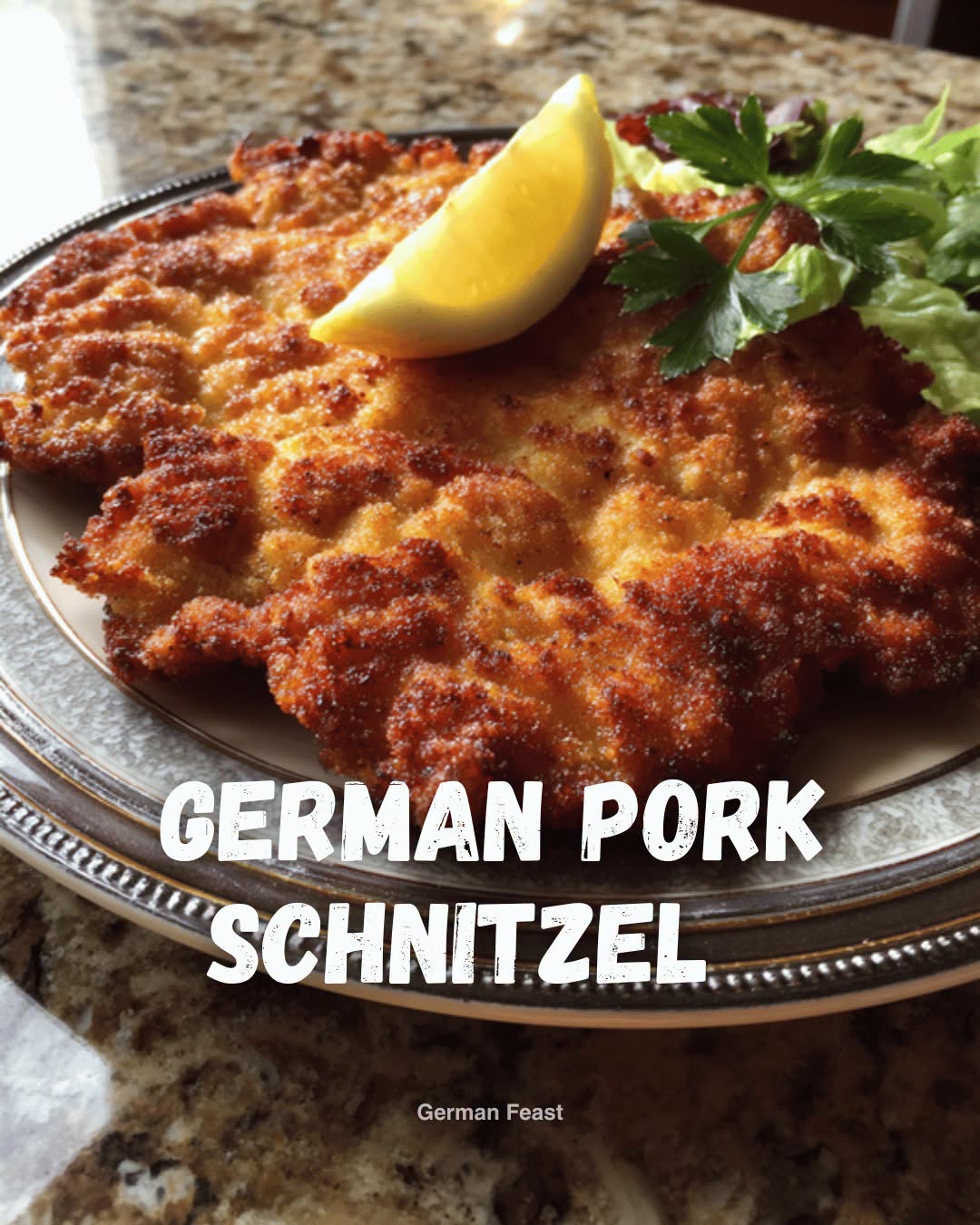
There is something so comforting about a perfectly cooked pork schnitzel. It has a crispy golden coating, juicy meat inside, and just a squeeze of fresh lemon over the top. It is simple food, but when it is made the right way, it feels extra special.
Pork schnitzel, or Schweineschnitzel in German, is a thin pork cutlet coated with flour, egg, and breadcrumbs before being fried until crisp and golden. It is one of the most popular everyday meals in Germany, and once you learn the right technique, it is surprisingly easy to make at home.
I have made schnitzel many times over the years, and I can honestly say that two small tricks make the biggest difference. First, never press the breadcrumbs onto the meat. Second, gently move the pan while the schnitzel fries. These simple steps help create the light, puffy, wavy coating that you usually only see in good German restaurants.
The best part is that you do not need fancy ingredients or special equipment. Just a few pantry staples, a couple of pork chops, and about 30 minutes are enough to make an authentic German pork schnitzel that is wonderfully crisp on the outside and tender on the inside.
Schnitzel 101: Which Schnitzel Is Which?
If you have ever looked at a German menu, you have probably seen several kinds of schnitzel. They all look similar, but there are a few important differences.
Wiener Schnitzel is the famous version from Vienna. By tradition, and by law in Austria, it is made with veal. The cooking method is almost the same, but the meat is different.
Schweineschnitzel, which is the recipe you are making today, uses pork instead of veal. This is the schnitzel that many families in Germany enjoy at home, and it is also the version you will often find in German restaurants.
Jägerschnitzel starts with a plain schnitzel and is finished with a rich mushroom sauce. The crispy coating is still there, but the sauce turns it into a hearty comfort meal.
Subscribe to our Newsletter!
Get updates on the latest posts and more from EasyWorldRecipes straight to your inbox.
First Name (optional)
Website
Your Email…
Subscribe
We use your personal data for interest-based advertising, as outlined in our Privacy Notice.
Rahmschnitzel is another popular version. Instead of mushroom hunter’s sauce, it is served with a creamy sauce that is smooth and full of flavor.
Once you learn how to make a perfect pork schnitzel, you can easily turn it into any of these classic dishes with just a few extra minutes of cooking.
Pork schnitzel served with buttered spaetzle, parsley, and lemon on white dinner plates.
Traditional German Pork Schnitzel Dinner
Why You’ll Love This Pork Schnitzel
One of the biggest reasons I keep coming back to this recipe is how reliable it is. The ingredients are simple, the steps are easy to follow, and the results always feel like something you would order at a good German restaurant. It is the kind of meal that looks impressive even though it is made with everyday ingredients.
This recipe is also perfect for busy evenings. From start to finish, dinner is ready in about 30 minutes, and you do not need a long list of ingredients. I often make it when I want something homemade but do not feel like spending hours in the kitchen.
Another reason I love this dish is how well it works for the whole family. Kids love the crispy coating, while adults appreciate the traditional flavor. It is one of those meals that almost everyone happily sits down to eat.
What Is Pork Schnitzel?
Pork schnitzel, known as Schweineschnitzel in Germany, is a thin slice of pork that is pounded until even, coated with flour, beaten egg, and fine breadcrumbs, then shallow fried until golden brown and crispy.
Although many people outside Europe think all schnitzel is made with veal, pork schnitzel is actually one of the most common versions served across Germany. It is an everyday meal that you can find in family kitchens, traditional restaurants, and cozy beer gardens.
The secret to authentic schnitzel is not expensive ingredients. It is all about technique. The pork should be pounded thin, the breadcrumbs should stay light instead of being pressed into the meat, and the schnitzel should gently float while it fries. These small details create the light, crisp coating that makes this dish so memorable.
A fresh squeeze of lemon right before serving is also part of the tradition. It brightens the rich, buttery coating and brings all the flavors together. Once you try it this way, you will never want to skip the lemon again.
Necessary Equipment
You do not need a fancy kitchen to make great pork schnitzel. A few basic tools are all it takes.
Meat mallet, rolling pin, or heavy pan for pounding the pork
Large freezer bag or plastic wrap to keep the meat from tearing
Sharp knife for trimming or butterflying thicker pork chops
Three shallow bowls for the breading station
Large skillet or frying pan
Kitchen tongs or a thin spatula
Instant-read thermometer for checking the oil and the pork
Wire cooling rack placed over a baking sheet
Paper towels for easy cleanup
Serving plate with fresh lemon wedges
I always recommend using a wire rack instead of paper towels after frying. It keeps air moving around the schnitzel, so the coating stays crisp instead of becoming soft from trapped steam.
Key Ingredients & Substitutions
The ingredient list is short, which means every ingredient has an important job. Choosing the right ones will help you get the best flavor and texture.
Raw pork chops with breadcrumbs, oil, salt, pepper, and seasonings on a wooden cutting board.
Pork Schnitzel Ingredients
Boneless pork chops: 4 boneless pork chops (about 1½ pounds or 680 g). These are the traditional choice for German pork schnitzel. I like chops that are not too lean because they stay juicy after frying. Pork tenderloin also works very well if you slice it into medallions and pound them thin.
Salt: About 1 teaspoon, or to taste. Always season the meat itself instead of only seasoning the flour. This gives every bite much better flavor.
Black pepper: About ½ teaspoon, freshly ground if possible. A little pepper adds gentle warmth without covering the natural flavor of the pork.
All-purpose flour: ½ cup (60 g). The flour helps the egg stick evenly to the pork, creating the perfect base for the breadcrumbs.
Large eggs: 2 large eggs, beaten until smooth. They hold the coating together while still allowing the breadcrumbs to puff during frying.
Plain fine breadcrumbs: 1½ cups (150 g). These are the traditional choice for authentic Schweineschnitzel because they create a light, delicate coating. If you prefer a crunchier texture, you can use panko breadcrumbs instead, but the final result will look and feel a little different.
Neutral frying oil: Enough to create about ¼ to ½ inch of oil in the pan. Oils such as canola, sunflower, or vegetable oil all work well because they can handle the frying temperature without adding a strong flavor.
Butter: 2 tablespoons. I always add butter to the oil because it gives the schnitzel a richer color and a wonderful buttery flavor. The oil also helps keep the butter from burning too quickly.
Fresh lemons: 1 or 2 lemons, cut into wedges. This is not just decoration. A squeeze of lemon is part of the traditional way to serve schnitzel and makes the crispy coating taste even brighter.
Fresh parsley: A small handful, chopped. It adds fresh color and a little freshness just before serving.
One thing I never recommend is using seasoned Italian breadcrumbs. Their herbs and spices change the classic German flavor. Plain breadcrumbs let the pork, butter, and fresh lemon stay the stars of the meal.
How to Make Pork Schnitzel
Making authentic pork schnitzel is all about following a few simple steps. None of them are difficult, but each one helps create that light, crispy coating and juicy pork that makes this dish so special. I always take my time with the preparation because the frying goes very quickly once the schnitzel hits the pan.
1. Prepare the Pork
Place each pork chop inside a large freezer bag or between two sheets of plastic wrap. Using a meat mallet, rolling pin, or even a heavy skillet, gently pound the pork until it is about ¼ inch (6 mm) thick. If you can get it a little thinner without tearing the meat, that is even better.
Try to keep the thickness as even as possible. This helps every part cook at the same speed, so you do not end up with dry edges and an undercooked center.
Pat the pork dry with paper towels, then season both sides with salt and black pepper. I always season the meat itself instead of only seasoning the flour. It makes a noticeable difference in the final flavor.
Pork schnitzel frying in butter and oil in a skillet until golden brown and crispy.
Pork Schnitzel Frying in a Skillet
