
Jump to:
What Is Marmorkuchen? (Germany’s Iconic Cake Explained)
How to make Marmorkuchen
Ingredients:
Recipe Steps
Recipe Variations
How to Create the Perfect Marble Swirl
How to Keep Your Marble Cake Moist Every Time
How to Serve It the German Way
How to Store and Freeze
FAQ
More Traditional German Cake Recipes
Have you made this recipe?
Recipe
What Is Marmorkuchen? (Germany’s Iconic Cake Explained)
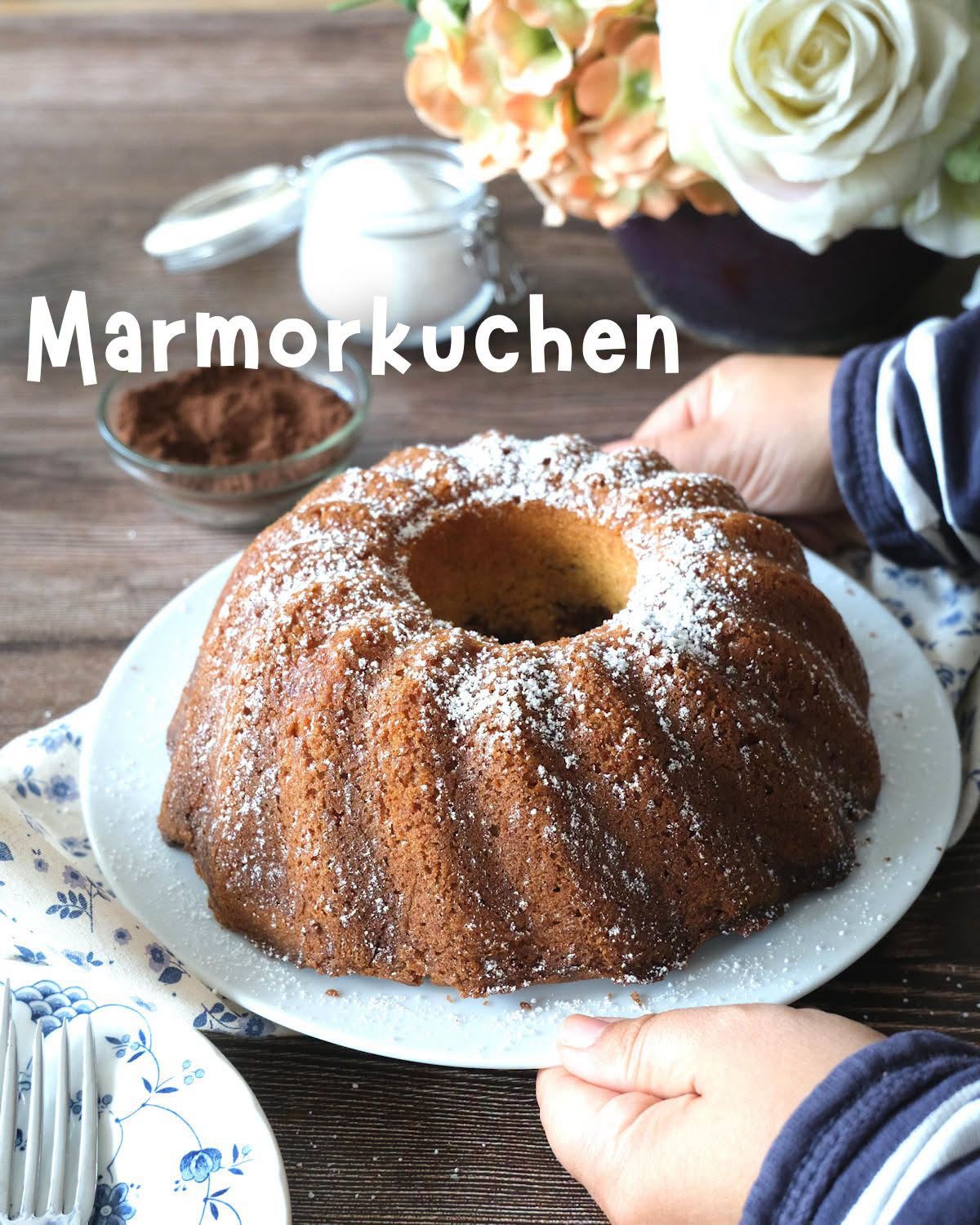
Marmorkuchen literally translates as “Marble Cake” – named after its distinct vanilla and chocolate swirl pattern. You pronounce it MAR-mor-KUE-chen. According to the German Baking Guide Book, it’s made from a simple sponge dough, with one-third of the cake consisting of cocoa-flavoured batter.
The first mention of this cake appeared in a Viennese cookbook in the 17th century, and back then, it wasn’t just chocolate and vanilla. Four colours were used, made from spices and herbs. Think green marble cake… yes, really!
German settlers brought the recipe to the USA, and the first marble cake recipe in English appeared in the 19th century. And now? You can find marble cake all over America.
But here’s the difference – in Germany, Marmorkuchen remains a humble pound cake. No layers, no frosting, no oil. Just honest, buttery simplicity.
Don’t worry about it being dry, though! My German marble cake recipe uses whipping cream, which locks in the moisture and keeps it fresh for up to 3-4 days.
Free Course! Introduction to German Food
In this 5-day series, you’ll learn the basics of German cuisine and familiarise yourself with the food culture in no time.
First Name
Website
Your Email…
Sign up
We use your personal data for interest-based advertising, as outlined in our Privacy Notice.
MY LATEST VIDEOS
Video Unpaused
Drizzing chocolate over German Marble Cake
How to make Marmorkuchen
Jump down to the printable recipe card for exact measurements. I made this cake in a gugelhupf pan, but you can use a loaf form or a bundt pan instead.
The bundt cake pan
Image of 9 inch /22 cm fluted cake pan
9 inch /22 cm fluted cake pan
Buy Now →
(affiliate link)
Ingredients:
For the detailed instructions and exact measurements, please jump to the printable recipe card
You only need a handful of simple pantry ingredients to make this Marmorkuchen. The simple sponge dough is made from butter and eggs, granulated sugar and flavoured with vanilla extract (affiliate link).
This is a sweet cake, but less sweet than most American recipes. Just one cup of sugar balances the flavours perfectly.
You can use all-purpose flour for this cake, but if available, cake flour is the closest to what we use here in Germany. Baking powder (affiliate link) makes the cake fluffy, and heavy cream ensures a beautifully moist marble cake. Use unsweetened cocoa (affiliate link) powder for a traditional recipe – but you can also swap it for real melted chocolate for a richer, fudgier chocolate swirl.
Recipe Steps
bundt form greased and layed out with bread crumbs
Step 1: Prepare Preheat your oven to 356°F / 180°C. Generously grease an 8-inch (22 cm) Bundt pan or tube pan with butter, then dust lightly with flour or breadcrumbs to prevent sticking.
marmorkuchen batter
Step 2: Make the Batter In a large bowl, beat the butter, sugar, and vanilla extract (affiliate link) with a stand or hand mixer until light and creamy, about 3-4 minutes. Add the eggs one at a time, beating well after each addition. Mix in the heavy cream. Sift the flour, baking powder (affiliate link), and salt into the mixture – sifting creates a lighter, airier cake. Fold or mix until just combined.
marbling the cake with a fork.
Step 3: Create the Marble Effect Pour two-thirds of the batter into your prepared pan. Sift the cocoa powder into the remaining batter and mix until evenly brown. Spoon the chocolate batter over the vanilla batter. Using a knife or skewer, swirl through the batters in a figure-eight or spiral motion to create the marbling – don’t overmix!
drizzling chocolate over the cake
Step 4: Bake and Cool Bake for 45-50 minutes, until a toothpick or skewer inserted into the center comes out clean or with just a few moist crumbs. Let the cake cool in the pan for 10 minutes, then turn out onto a wire rack to cool completely.To make the chocolate glaze, melt the chocolate chips (affiliate link) and butter, mix until combined and then drizzle over the cake.
Recipe Variations
Of course, every family in Germany has their own version of Marmorkuchen, and that’s exactly what makes it such a beloved classic. The beauty of this cake is how versatile it is. Here are three popular variations worth trying:
Instead of colouring the chocolate batter with cocoa powder, swap it for 2 teaspoons of Nutella or chocolate spread for a sweeter, creamier chocolate swirl.
Add a teaspoon of rum or red wine to the chocolate batter for an extra depth of flavour. Don’t despair about the red wine, it works perfectly! Just like in my German Red Wine Cake, it adds a beautiful richness without tasting of wine at all.
For an extra special Easter version, try Eierlikör Marmorkuchen, a popular German variation made with Eierlikör (egg liqueur). It adds a wonderfully rich, creamy flavour to the batter that’s hard to resist. If you’d like to try this version, follow my Eierlikör Cake recipe for the batter, but use the chocolate batter and swirling technique from this recipe.
Claim your FREE German Mini-Cookbook!
Sign up and I’ll send you 8 authentic German recipes to try at home — plus new recipes in your inbox every week!
First Name
Website
Your Email…
Get my free cookbook!
We use your personal data for interest-based advertising, as outlined in our Privacy Notice.
German Marble Cake
How to Create the Perfect Marble Swirl
There is more than one way to create that beautiful marble pattern and every German baker has their favourite technique. Here are three options to try:
The Fork Method (my favourite): Place the chocolate batter on top of the vanilla batter. Using a fork, mix in spiral motions while slowly turning the cake pan. A longer meat fork gives an even more pronounced marble effect.
The Knife Method: Pour the vanilla batter into the pan first, then add the chocolate batter on top. Using a knife, make 1 cm deep incisions through the batter. Sprinkle a little granulated sugar into the incisions and the sugar will slowly sink down, creating a beautiful natural pattern as it goes.
The Layer Method: Add the vanilla and chocolate batters to the pan in alternating portions. Start with half the vanilla batter, add the chocolate layer, then finish with the remaining vanilla batter on top. Using a skewer or cake needle, make gentle circular motions through all the layers to create the marble effect.
One golden rule for all three methods: don’t overmix! A few deliberate motions are all you need. The less you swirl, the more dramatic and defined your marble pattern will be.
Want to save this recipe?
Share your email below & we’ll send it to you! Plus you’ll get new German recipes from me every week!
First Name
Email Address
How to Keep Your Marble Cake Moist Every Time
The number one complaint about marble cake is that it turns out dry, but the good news is it is completely avoidable.
Don’t overbake. Always start testing earlier than you think. Insert a skewer into the centre from 45 minutes onwards and remove the cake as soon as it comes out clean.
Use room temperature ingredients. Butter, eggs and cream should all be at the same temperature before you start. Cold ingredients affect the texture and lead to a drier crumb.
Don’t overmix after adding the flour. Mix until just combined and then stop. Overmixing activates the gluten and is one of the most overlooked reasons a marble cake turns dry and tough.
Follow these three rules and your Marmorkuchen will come out moist every time.
How to Serve It the German Way
In Germany, Marmorkuchen is traditionally enjoyed in the afternoon between 3 and 4 pm. This beloved ritual is called “Kaffee und Kuchen” which literally translates as “coffee and cake” and is as important to Germans as afternoon tea is to the British.
Serve it with a strong cup of coffee or tea for the adults, and children love it with a cold glass of milk or juice. A plate yes, but a fork is not compulsory (although some people do use one!)
Claim your FREE German Mini-Cookbook!
Sign up and I’ll send you 8 authentic German recipes to try at home — plus new recipes in your inbox every week!
First Name
Website
Your Email…
Get my free cookbook!
We use your personal data for interest-based advertising, as outlined in our Privacy Notice.
And if you are a tea lover, did you know that Germany has its very own tea ceremony? Learn about the East Frisian Tea Ceremony here.
How to Store and Freeze
Marmorkuchen actually improves on day two as the flavours settle and deepen!
Store in an airtight container at room temperature for up to 3-4 days. One important tip: do not store it in the fridge as it will dry out quickly.
This cake also freezes beautifully for up to 3 months. Slice first, wrap each slice individually in cling wrap and pop them into a freezer bag. Thaw at room temperature for about an hour and it will taste as fresh as the day it was baked.
FAQ
Why does my marble cake turn out dry?
Can I make Marmorkuchen without a Bundt pan?
What is the difference between Marmorkuchen and American marble cake?
More Traditional German Cake Recipes
Käsekuchen (German Cheese Cake)
Poppyseed Cake (Mohnkuchen)
Strawberry Cake (Erdbeerkuchen)
Hazelnut Cake (Haselnusskuchen)
Blitzkuchen (lightening cake)
Stollen (German Christmas Cake)
Have you made this recipe?
Marita – Autheor of MyDinner.co.uk
I’d love to hear how it turned out! Leave a rating and comment below.
You’ll help fellow readers enjoy it too and help me spread the word about German cuisine. – Marita x
Recipe
Marmorkuchen-German Marble Cake
Marmorkuchen: Authentic German Marble Cake That Never Fails
4.92 from 12 votes
I look forward to your feedback. Just click the stars above.
by Marita Sinden
Marmorkuchen is Germany’s classic marble bundt cake – a moist, buttery vanilla and chocolate swirl baked in a Gugelhupf pan. Less sweet than American marble cake, this authentic German recipe barely ever goes wrong and keeps fresh for up to 4 days.
Print Recipe
Pin Recipe
Prep Time
20minutes mins
Cook Time
45minutes mins
Total Time
1hour hr 5minutes mins
Course
Dessert
Cuisine
German
Servings
12 slices
Calories
403 kcal
Equipment
9- inch / 22 cm Bundt Cake Pan
Ingredients
0.25x
0.5x
1x
2x
▢1 cups (250 g) butter (softened at room temperature)
▢1 cups (200 g) granulated sugar 10.5 oz
▢2 teaspoon vanilla extract
▢5 eggs (medium size, at room temperature)
▢¾ cup (180 ml) whipping cream or heavy cream
▢2 ½ cups (300 g) all-purpose flour Germany 405, UK plain flour, USA purpose flour
▢3 teaspoon baking powder
▢1 pinch salt
▢3 tablespoon unsweetend cocoa powder
To decorate
▢2 table spoons icing sugar /confectioners sugar optional
▢1 pack dark chocolate glaze for a homemade dark chocolate glaze please check the notes below
Cook Mode
Prevent your screen from going dark
Instructions
Preheat your oven to 356°F / 180°C.
Generously grease an 8-inch (22 cm) Bundt pan or tube pan with butter, then dust lightly with flour or breadcrumbs to prevent sticking.
In a large bowl, beat the butter, sugar, and vanilla extract (affiliate link) with a stand or hand mixer until light and creamy, about 3-4 minutes.
1 cups butter ,1 cups granulated sugar ,2 tsp vanilla extract (affiliate link)
Add the eggs one at a time, beating for approximatley 30 seconds after each addition. Mix in the heavy cream.
5 eggs ,¾ cup whipping cream
Sift the flour, baking powder (affiliate link), and salt into the mixture. (Sifting creates a lighter, airier cake.) Fold or mix until just combined. (overmixing will cause the cake to become dense)
2 ½ cups all-purpose flour,3 teaspoon baking powder (affiliate link) ,1 pinch salt
Pour two-thirds of the batter into your prepared pan.
Sift the cocoa powder to the remaining batter and mix until evenly brown.
3 tablespoon unsweetend cocoa powder
Spoon or pour the chocolate batter over the vanilla batter. Using a knife or skewer, swirl through the batters in a figure-eight or spiral motion to create marbling-don’t overmix!
marbling the cake with a fork.
Bake for 45-50 minutes, until a toothpick or skewer inserted into the center comes out clean or with just a few moist crumbs.
Let the cake cool in the pan for 10 minutes, then turn out onto a wire rack to cool completely.
To decorate
Once cooled either dust with powdered sugar or drizzle with melted dark chocolate glaze.
2 table spoons icing sugar /confectioners sugar ,1 pack dark chocolate glaze
Video
►
Notes
Homemade Chocolate Glaze
Melt 200g (7 oz) dark chocolate with 50g (3½ tablespoons) butter in a heatproof bowl over a pan of simmering water, stirring until smooth. Remove from the heat and let it cool for 5 minutes before pouring over the cooled cake. The glaze will set as it cools.
Storage Instructions
Marmorkuchen keeps in an airtight container for 3-4 days. However, it is also a great cake to freeze. In the freezer, it should last for up to three months.
