
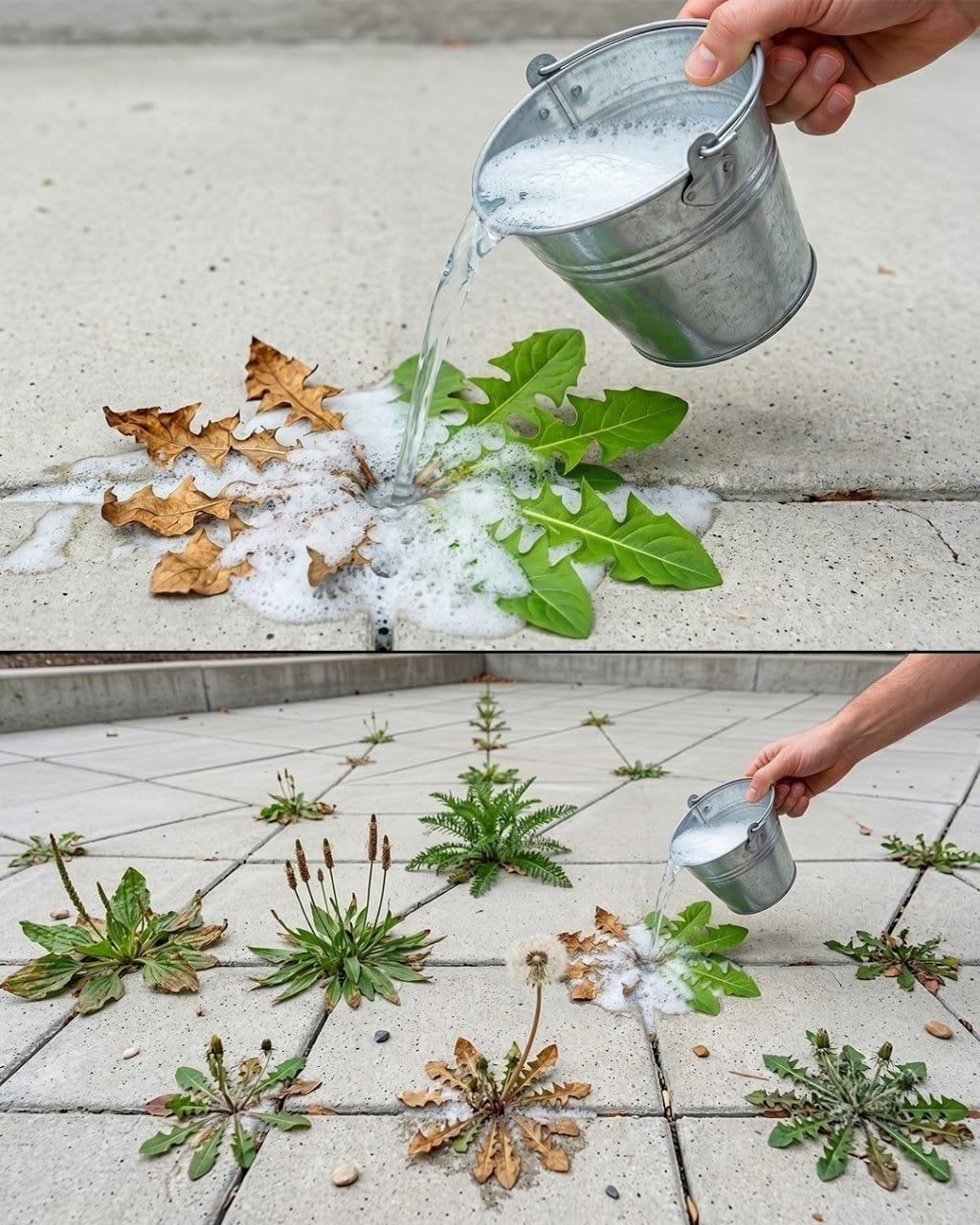
White vinegar
White vinegar contains acetic acid.
When sprayed directly onto the leaves, the acid damages plant tissues and dehydrates surface cells.
As a result, the weed begins to wilt and dry out.
Table salt.
Salt is one of the most potent ingredients in the mixture.
It works by drawing water out of plant cells through a process called osmosis.
Without sufficient water, the plant struggles to survive.
However, salt must be used with great caution, as it can also damage the soil itself.
Citric acid
adds extra acidity that helps weaken plant tissues.
When combined with vinegar, it creates a more powerful contact effect on exposed leaves.
Dish soap
Plant leaves naturally have a waxy, water-repellent coating.
Dish soap helps break this surface tension.
This allows the vinegar and citric acid solution to adhere to the weed instead of running off.
What this herbicide can and cannot do.
Many people expect homemade weed killers to work exactly like commercial systemic herbicides.
This is generally not the case.
This mixture acts primarily as a contact herbicide.
It damages the parts of the plant it comes into direct contact with.
Leaves often wilt within a few hours and may appear completely dead within a day or two.
However, deep roots may survive.
With perennial weeds, new shoots can sometimes appear weeks later.
Multiple treatments may be required.
300 ml water,
200 ml white vinegar,
1 tablespoon salt,
1 tablespoon citric acid,
1 tablespoon dish soap,
1 additional liter of water for dilution.
Mix well until the salt and citric acid have completely dissolved.
Strain if necessary and pour into a spray bottle.
Important safety considerations:
The salt is the most critical factor.
Repeated application of salt can damage soil structure and create areas where future plants will struggle to grow.
For this reason, this type of spray is best reserved for:
Cracks in driveways,
sidewalk edges,
gravel paths,
patio joints.
Avoid heavy use around:
Vegetable gardens,
flowerbeds,
trees,
and shrubs.
Application tips:
Apply during hot, sunny weather.
Spray directly onto the leaves.
Avoid windy conditions.
Keep away from plants you wish to keep.
Wear gloves and protective eyewear.
Sunlight accelerates drying and enhances the effect on the leaves.
In conclusion,
homemade weed killers can be an effective tool for managing unwanted plants in certain areas around the home.
They are inexpensive, easy to prepare, and often yield quick, visible results.
However, understanding their limitations is just as important as understanding their benefits.
Since these mixtures generally affect only the parts of the plant they come into contact with—and because salt can have long-term effects on the soil—they should be used judiciously and selectively.
When used responsibly, they can help maintain a neat appearance for driveways, sidewalks, and paved surfaces while reducing reliance on stronger chemical herbicides.
