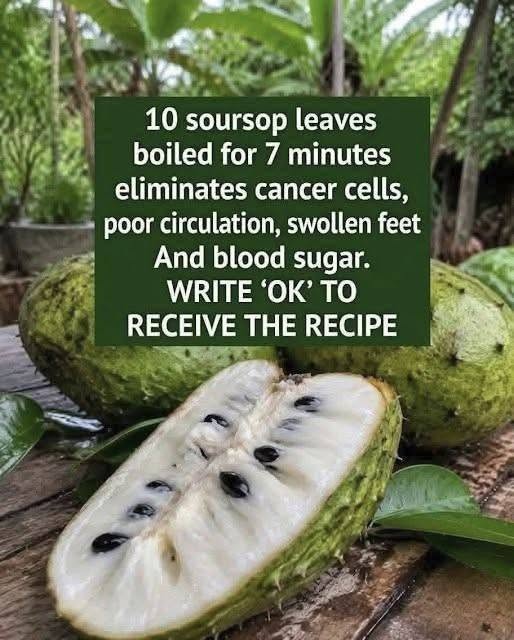
Soursop (Annona muricata), also known as graviola, is a tropical plant whose leaves have been used for generations in traditional herbal practices across parts of the Caribbean, Latin America, Africa, and Southeast Asia. In recent years, soursop leaf tea has gained attention online, with many claims circulating about its potential health effects.
Some of those claims are exaggerated or unsupported by human research. This article takes an evidence-based approach, explaining how the tea is traditionally prepared, what people commonly use it for, and what current science can—and cannot—confirm.
What Is Soursop Leaf Tea?
Soursop leaf tea is an herbal infusion made by steeping dried or fresh soursop leaves in hot water. It is not the same as eating the fruit, which has a creamy white flesh and a sweet-tart flavor.
Traditional preparations vary by region, but the tea is typically consumed in small amounts as part of cultural wellness practices rather than as a medical treatment.
A Simple Traditional Preparation
Ingredients
5–10 dried soursop leaves (or a few fresh leaves)
2 cups of water
Preparation
Rinse the leaves thoroughly.
Bring the water to a gentle boil.
Add the leaves and simmer for several minutes.
Remove from heat and let the tea steep briefly.
Strain before drinking.
Many traditional recipes differ in leaf quantity and steeping time, which is one reason standardized scientific conclusions are difficult.
Traditional Uses
People have historically used soursop leaf tea for purposes such as:
Relaxation
General wellness
Digestive comfort
Evening herbal routines
These are traditional uses, not proof that the tea treats or cures any disease.
What Research Has Studied
Laboratory studies have identified compounds in soursop leaves, including acetogenins and other plant chemicals. Researchers have investigated these compounds in test tubes and animal models for various biological activities.
However, an important distinction must be made:
What the evidence means
Lab findings: observed in cells or animals.
Human evidence: currently limited and insufficient for medical claims.
This means scientists cannot currently say that soursop leaf tea cures cancer, lowers blood sugar, improves circulation, or treats swollen feet in humans.
Why Online Claims Are Misleading
Statements such as “eliminates cancer cells” often take a laboratory observation and present it as if it were a proven human treatment. Many substances can affect cells in a petri dish, but that does not mean drinking them will safely produce the same effect in the human body.
Health organizations generally recommend caution with any product marketed as a cure for serious diseases.
Possible Risks and Side Effects
Soursop products are not risk-free. Researchers have raised concerns about certain compounds that may affect the nervous system when consumed in large amounts over long periods.
Potential concerns include:
Nausea
Digestive upset
Interactions with medications
Unknown effects during pregnancy
Possible neurological concerns with excessive intake
Anyone with a medical condition or taking prescription medication should speak with a qualified healthcare professional before using concentrated herbal products regularly.
A Balanced Way to Think About Soursop Tea
A reasonable perspective is:
Soursop Leaf Tea: How to Make It, Traditional Uses, and What Science Actually Says