
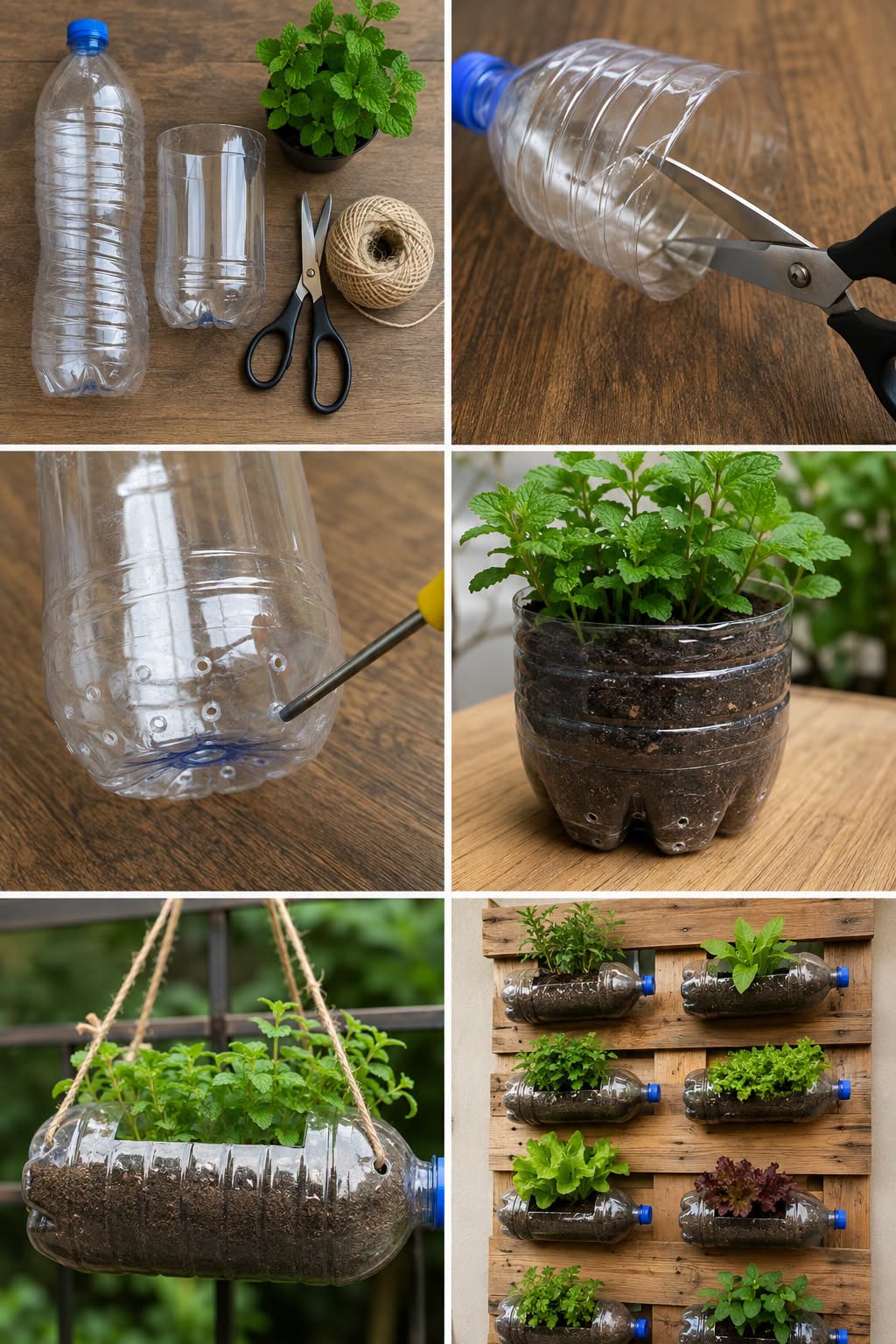
Plastic bottles are one of the most common waste items found in households. Instead of throwing them away, why not transform them into something useful for your garden? With a bit of creativity and simple tools, used plastic or PET bottles can be turned into effective, eco-friendly plant pots, making them perfect for small-space or urban gardening.
This sustainable approach helps reduce household waste, saves money, and supports greener living. Whether you have a balcony, windowsill, rooftop, or backyard garden, reusing plastic bottles is an easy and smart way to grow herbs, vegetables, or ornamental plants.
Here’s how to do it—and why it works so well.
Why Use Plastic Bottles as Pots?
Plastic bottles are durable, lightweight, and easy to modify. With the right design, they can replicate many of the functions of store-bought pots, including drainage, support, and even self-watering systems.
Benefits include:
Cost savings – No need to buy pots or containers.
Waste reduction – Repurposes plastic that might otherwise end up in landfills.
Custom sizes – Cut and adjust bottles to fit the space and plant size.
Mobility – Lightweight containers are easy to move around.
Versatility – Suitable for hanging gardens, vertical walls, or flat surfaces.
Materials You’ll Need
To make plant pots from plastic bottles, you’ll need:
Empty plastic bottles (1.5L, 2L, or 5L sizes work well)
Scissors or a utility knife
A marker or pen
A nail or screwdriver (for poking drainage holes)
String or wire (for hanging options)
Optional: paint, labels, or decorative materials
Method 1: Classic Cut Pot
This is the simplest design.
Clean the bottle thoroughly and remove the label.
Cut the bottle in half or 2/3 of the way up, depending on the size you want.
Make drainage holes in the bottom using a nail or screwdriver.
Fill with soil and plant your seeds or seedlings.
These containers are great for herbs, lettuces, flowers, or any shallow-rooted plants.
Method 2: Hanging Bottle Planter
Perfect for balconies or fences, this option adds verticality to your garden.
Use a 2L or 5L bottle and cut a horizontal rectangle on one side to create an opening.
Poke drainage holes in the bottom and two small holes on each end of the bottle’s top (opposite the opening) to insert string or wire.
Tie the strings to create a hanging support.
Fill with potting mix and plants.
Hang your new planter from a railing, wall, or hook.
You can make several and hang them in a vertical line for a space-saving mini-garden.
Method 3: Self-Watering Pot
Great for people who travel often or forget to water their plants.
Cut a bottle in half.
Take the top part (with the cap) and pierce a small hole in the cap.
Thread a piece of cotton string or cloth through the hole—it will act as a wick.
Fill the bottom part of the bottle with water.
Place the top part (inverted) into the bottom, so the wick hangs in the water.
Add soil and plant your seedling.
The wick draws moisture from the bottom as needed, keeping the plant hydrated longer.
Method 4: Vertical Wall Garden
For this setup, you’ll need several bottles of the same size.
Cut horizontal openings in each bottle.
Make small drainage holes at the bottom.
Attach the bottles to a wooden board, mesh panel, or directly to a wall using screws, nails, or string.
Stagger them in rows for better light and water distribution.
Fill with soil and add plants.
This method works beautifully for herbs, strawberries, leafy greens, and succulents.
Decorating Your Bottle Pots
Want to make your planters more visually appealing? Try these tips:
Paint the outside with non-toxic acrylic paint. You can add patterns, labels, or colorful designs.
Use washi tape or rope to wrap around the bottle for a rustic or modern look.
Add chalkboard labels to note the plant names and dates.
Remember to only decorate the outside of the bottle—especially if you’re growing edible plants.
Best Plants for Bottle Gardening
While you can grow many types of plants in plastic bottles, these are especially well-suited:
Herbs: basil, mint, thyme, cilantro, oregano
Greens: lettuce, spinach, arugula, Swiss chard
Flowers: marigolds, pansies, petunias
Vegetables: chili peppers, cherry tomatoes, green onions
Succulents and small cacti
For larger crops, like tomatoes or eggplants, consider using large water jugs (4–6L) or combining several containers into a raised system.
Final Thoughts
Plastic bottle planters are more than just a clever DIY—they’re a practical solution for urban gardeners who want to save money, recycle, and make the most of limited space. Whether you’re growing food or flowers, you can easily adapt these designs to suit your needs.
With just a few bottles and a little time, you can create an eco-friendly container garden that’s productive, attractive, and kind to the planet.
