
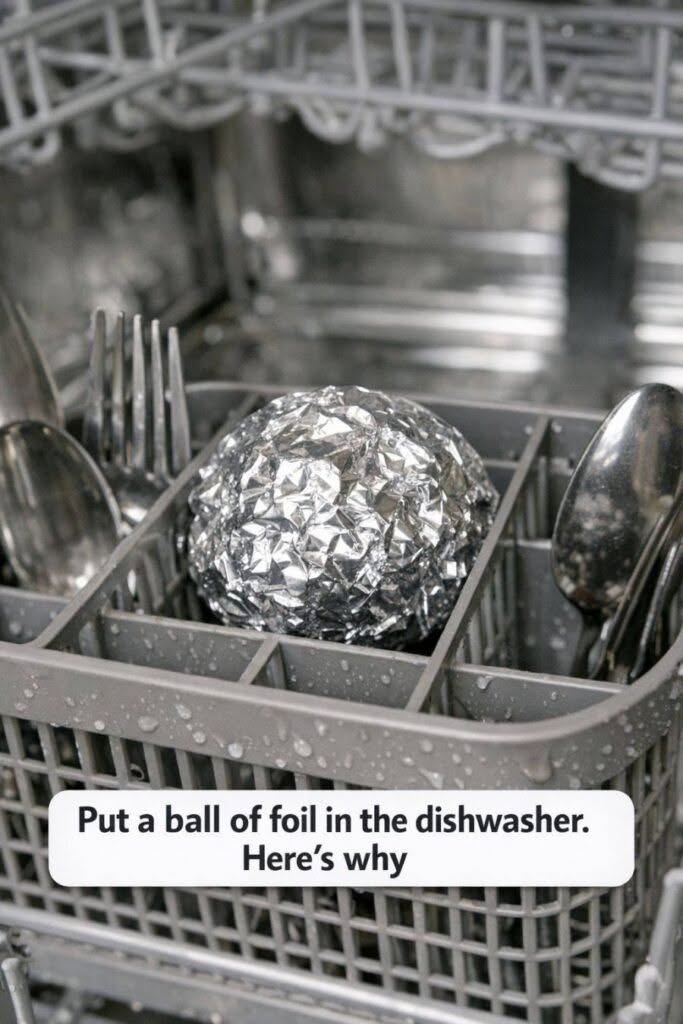
In the ever-evolving world of household hacks, a new trend has taken social media by storm: placing a ball of aluminum foil in the dishwasher. This unconventional trick promises to enhance the cleaning power of your dishwasher, particularly for tarnished silverware. As with many viral trends, it has sparked curiosity and skepticism alike.
But why exactly would you put a ball of foil in your dishwasher? Is it just a gimmick, or is there real science backing this method? This article delves into the details, exploring the reasons behind this hack, how it works, and whether it truly delivers on its promises.
1. The Viral Aluminum Foil Dishwasher Trick Explained
The aluminum foil dishwasher hack gained popularity on platforms like TikTok and Instagram, where users claimed that adding a ball of foil to their dishwasher loads resulted in shinier, cleaner silverware. The idea is simple: the aluminum foil interacts with the dishwashing detergent to help remove tarnish from silver and silver-plated items.
According to proponents of the hack, the foil ball should be about the size of a golf ball and placed in the cutlery basket or on the top rack of the dishwasher. The theory is that the aluminum helps to break down tarnish through a chemical reaction, resulting in sparkling silverware by the end of the wash cycle.
Tarnish is a common problem for silverware, caused by the oxidation of silver when it comes into contact with sulfur compounds in the air or in food. This oxidation results in a dull, discolored appearance. When a ball of aluminum foil is placed in the dishwasher, it acts as a sacrificial anode. In simple terms, the tarnish is transferred from the silver to the aluminum.
This process is facilitated by the presence of dishwashing detergent, which contains alkaline salts. These salts help to create an environment where the aluminum can effectively attract the sulfur compounds away from the silver, thus reversing the tarnish. The result is that, after a wash cycle, the silverware appears much shinier.
3. The Science: Aluminum, Detergent, And Oxidation Reactions
The underlying science of this hack involves a redox reaction, where the aluminum serves as a reducing agent. When aluminum comes into contact with the detergent, particularly those containing phosphates, it begins to oxidize. This oxidation process releases electrons, which are then transferred to the silver sulfide (tarnish) on the silverware.
