
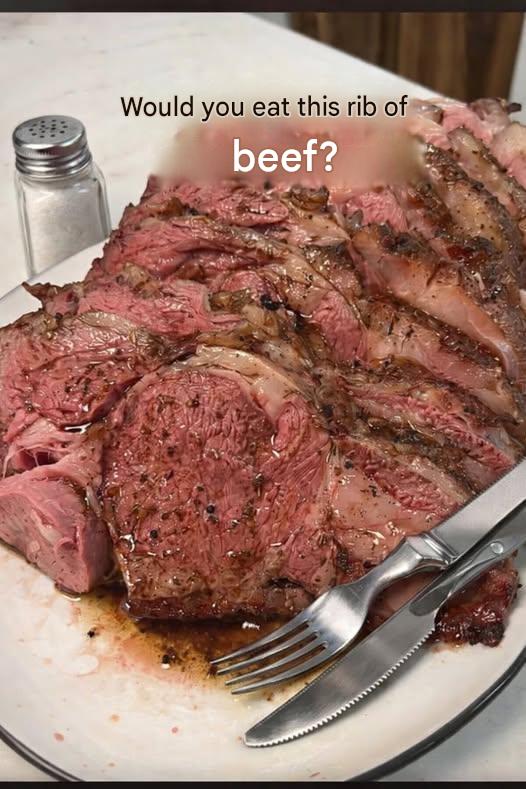
: Bring to room temperature: Remove the rib roast from the refrigerator at least 2 hours before cooking. Crucial step: Putting a cold roast into a hot oven leads to uneven cooking, with the edges becoming dry and overcooked before the center is heated through.
Preparing the herb mixture: In a small bowl, mix the minced garlic, chopped rosemary, thyme, kosher salt, cracked black pepper, and olive oil (or butter) until a thick, fragrant paste forms. Thoroughly pat the roast dry with paper towels, then rub the paste all over, ensuring the thick fat cap is well coated.
High-heat searing: Preheat your oven to 232°C (450°F). Place the seasoned roast, fat-side up, on a roasting rack inside a large, high-sided roasting pan. Roast at this high temperature for 15 minutes to quickly sear the exterior, lock in the juices, and develop a beautiful caramelized crust.
Slow roasting at low temperature: Reduce the oven temperature to 163°C (325°F) without opening the door. Continue roasting until a meat thermometer inserted into the thickest part of the beef (avoiding the bone) registers the desired doneness.
Rare: 115°F to 120°F (approximately 11 to 13 minutes per pound)
Medium-rare: 125°F to 130°F (approximately 13 to 15 minutes per pound)
The Essential Rest: Place the roast on a warm cutting board and tent it loosely with aluminum foil. Let it rest undisturbed for 20 to 30 minutes. The temperature will continue to rise by about 3°C during this time (carry-over cooking), and the meat fibers will relax, allowing the flavorful juices to redistribute evenly. Slice into thick portions and serve.
Chef’s Tips
: Choose the best cut: Opt for USDA Prime or USDA Choice beef with abundant, uniform marbling. This marbling melts during slow cooking, preserving the meat’s exceptional tenderness.
Dry-brining method: For even deeper flavor and an incredibly crispy crust, salt the meat 24 hours in advance and store it uncovered on a wire rack in the refrigerator. Add herbs, pepper, and oil just before roasting.
Presentation
Classic: Slice the rested meat into thick, juicy pieces, cutting against the grain. Serve with a gravy boat of hot pan juices and a bowl of creamy, zesty horseradish sauce.
Traditional sides: Enjoy with creamy garlic mashed potatoes, buttery Yorkshire puddings, and honey-glazed roasted carrots or asparagus.
Health and Wellness Perspective
High-quality protein: Prime rib is rich in highly bioavailable complete protein, providing the nine essential amino acids needed for muscle synthesis, tissue repair, and immune support.
Essential micronutrients: A single serving provides an impressive concentration of iron, zinc, and vitamin B12—nutrients essential for oxygen transport, optimal cellular metabolism, and nervous system health.
Satiety and energy density: Naturally rich in healthy culinary fats, this cut of meat promotes a strong sense of satiety, leaving you feeling full and satisfied while providing a source of clean, stable, low-glycemic energy.
Culinary history and origins:
The standing rib roast is deeply rooted in British culinary history, having become the ultimate symbol of luxury during Anglo-Saxon Sunday feasts in the Industrial Revolution era. In the past, large families would purchase an impressive multi-bone rib roast to spit-roast over an open fireplace, allowing the layer of fat to continuously baste the meat.
As English culinary traditions spread to North America, the rib roast established itself as a staple of mid-20th-century American gastronomy. High-end restaurants, luxury hotels, and traditional private clubs introduced dedicated “roast beef trolleys”—imposing, silver, dome-topped rolling carts designed to keep whole roasts warm and juicy. Carving this beautifully marbled meat tableside became a symbol of the era’s luxury, making the rib roast a favorite dish for American celebrations, renowned steakhouses, and family gatherings.
